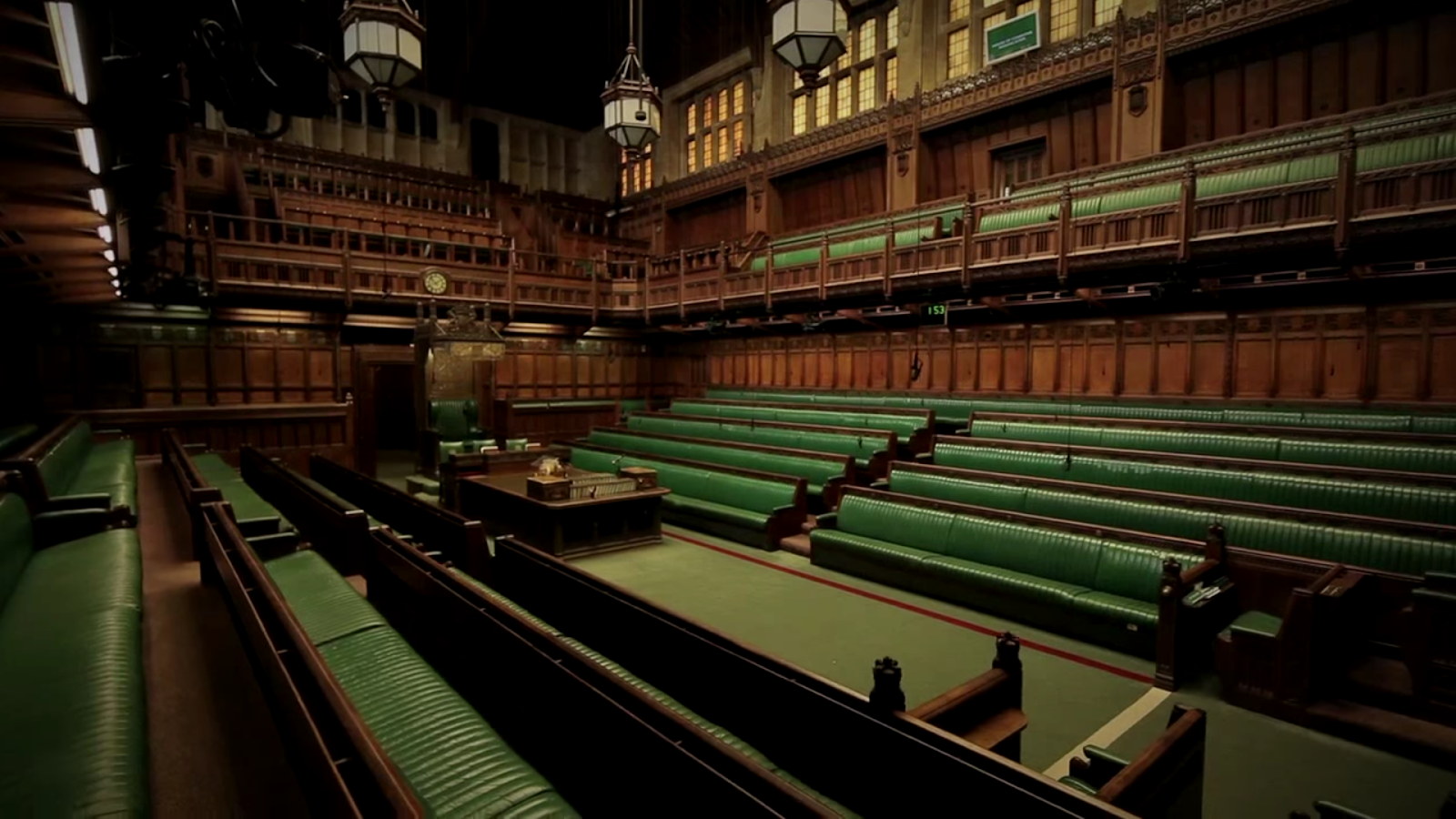
‘Nations stumble upon establishments, which are indeed the result of human action,
but not the execution of any human design.’
Adam Ferguson, An Essay on the History of Civil Society (1767)
Showing posts with label Benjamin Disraeli. Show all posts

24 February 2020

On the Record | Brexit Britain Betrayed

Please see my February 16th wire for The American Spectator, ‘Brexit Britain Betrayed’:

There is no act of treachery or meanness of which a political party is not capable; for in politics there is no honour.

~ Benjamin Disraeli

Barely two weeks since Brexiteers celebrated Britain’s exit from the European Union, already alarms are being raised that Britons’ ultimate independence is still under siege. Not from Brussels, but from Westminster. Oh, say it isn’t so. Still, few are unsurprised, if nevertheless saddened, that Boris Johnson fails to live up to expectations.

Brexiteers were always skeptically optimistic about the prime minister’s prospects. As European correspondent for the London Telegraph, Johnson was solidly dismissive of the burgeoning EU superstate. Yet as London mayor, his record was unremarkable for its adherence to conservative principles — a record unchanged as prime minister. Some men “count it a bondage to fix a belief,” Francis Bacon believed; while James Delingpole surmises that “Boris’ problem (one of several) is that he is a man of no certain political principle who likes to be liked.”

The Brexit brief is no less blemished. While a member of Theresa May’s cabinet, Johnson resigned as Foreign Secretary when Theresa May’s Chequers Agreement (July 2018) alluded that UK–EU negotiations would achieve a Brexit in name only.

Then, when the prime minister’s Withdrawal Agreement came before the House of Commons in the early months of 2019, Johnson voted no against the agreement twice, only to acquiesce on the third attempt to pass the bill. He rationalized his reversal on the justification that worse was to come if Remainers prevailed.

In the face of overwhelming opposition from all sides in the Commons, May resigned the premiership in June. Boris Johnson was the presumptive favorite. Other challengers for the Conservative leadership were as strong (if not more so) proponents of Britain’s independence from the EU, but none shared his charisma or popular appeal — both vital if Brexit was to make it over the finish line. So “up to the top of the greasy pole” Boris went and into Number 10.

The new prime minister enjoyed no more respite from Parliament than his predecessor. Even his prorogation to bring in a fresh parliamentary session was overturned by a suspect UK Supreme Court — an affront to prerogative that ensnared Elizabeth II along with Johnson. Finally, in October, he reached a deal with Brussels to the angst of Brexiteers — an agreement many argued was even worse than that which May had achieved.

Regardless, the die was cast. Looking for solace where they would, Brexiteers reasoned that as bad as Boris’s deal might be, there was wiggle room moving forward. Only Brexit had to be won first or else all was in vain. And the prime minister was still their ace card against the range of Remainers rising up to revoke Brexit.

Read more . . .

Remarks are welcome on DMI’s Facebook page.

__________

My thanks to editor Wlady Pleszczynski of The American Spectator.

11 February 2020

On the Record | Brexit Success Will Inspire Envy for EU

Please see my February 10th wire for The American Spectator, ‘Brexit Success Will Inspire Envy for EU’:

There is a dayspring in the history of this nation, which perhaps those only who are on the mountaintops can as yet recognize,” Benjamin Disraeli wrote of England. “You deem you are in darkness, and I see a dawn.”

Since January 31, when Britain regained political independence from the European Union, Brexiteers occupy those “dizzying” heights as they contemplate the potential before them. Opponents of breaking free from the bonds of Brussels, meanwhile, remain very much in the dark. For them, it is not the dawn of a new day but the sunset of their hopes to partake of a Euro superstate.

Premier Boris Johnson rallied the nation from 10 Downing Street. “This is not the end, but a beginning,” he said. (Who now denies that Johnson is the heir to Disraeli?) “This is the moment that the dawn breaks and the curtain goes up on a new act in our great national drama,” Johnson enthused, “a moment of real national renewal and change.” Echoing Disraeli, the prime minister promised, “This is the dawn of a new era.”

The work of Brexit is only just begun. Britain remains in a “transition” period, still under EU partial jurisdiction until the end of the year, when it successfully negotiates a trade agreement with its former EU colleagues or strikes forth on a “clean break” Brexit and trades with the EU on World Trade Organization rules.

For all Johnson’s optimism, the prospects of arriving at amiable terms with the EU are grim. Its leaders are demanding “alignment” on matters of trade and regulations, and a “level playing field” with respect to UK’s future taxation and welfare policies. Brussels’ aim is to curtail any economic advantages that cutting taxes and regulations may give to Britain, while simultaneously slipping in a “poison pill” to kill off UK trade agreements on the global stage, principally with America.

Britain, regardless, should consider itself lucky. EU leaders are planning worse to come for the remaining EU-27 member countries.

Read more . . .

Remarks are welcome on DMI’s Facebook page.

__________

My thanks to editor Wlady Pleszczynski of The American Spectator.

29 January 2020

On the Record | Beware of Supposing Brexit’s Cause Is Won

Please see my January 27th wire as Brexit diarist for The New York Sun, ‘Beware Of Supposing Brexit’s Cause Is Won’:

“Can we easily leave the remains of such a year as this? It is all still gold,” the diarist Horace Walpole wrote as Great Britain won conquest after conquest, at France’s expense, during the final months of the Seven Years’ War. “Our bells are worn threadbare with ringing for victories.”

Yet much to the disappointment of Brexiteers, “Big Ben,” which crowns that iron choir atop the Elizabeth Tower, will “not” sound out at 11 p.m. when the United Kingdom takes its leave of the European Union and regains independence.

“What we obtain too cheap, we esteem too lightly,” the Anglo-American revolutionary, Thomas Paine, wrote in the opening of “The Crisis.” “ ’Tis dearness only that gives everything its value.”

No one can claim that Brexiteers have had an easy time of it. Eurosceptics exposed the insidious nature of EU membership from the beginning. Prime Minister Thatcher marked the turning point with her “Bruges Speech” of September 1988, in which she famously declared: “We have not successfully rolled back the frontiers of the state in Britain, only to see them re-imposed at a European level with a European super-state exercising a new dominance from Brussels.”

The ups and downs on the road to Brexit are too numerous to count. There was the successful June 2016 referendum to “take back control,” followed by the disastrous premiership of Theresa May, whose decision to go to the polls precipitously in June 2017 nearly ended Brexit. The resulting “Remainer Parliament” was perhaps its worst outcome — second only to Mrs. May’s compromised Withdrawal Agreement. Remainer MPs, meanwhile, kept the Tory Government tied up in knots and subject to the whims of Westminster.

In this dark hour for British independence, arises its paladin premier, Boris Johnson, who on the charge of “getting Brexit done” won electoral victory in December. The promise was that come January 31, the UK would be out of the EU. And so it is about to come to pass.

Read more . . .

Remarks are welcome on DMI’s Facebook page.

__________

My thanks to editor Seth Lipsky of The New York Sun.

24 January 2020

On the Record | Brexit Cries Out for Radical Toryism

Please see my January 18th wire for The American Spectator, ‘Brexit Cries Out for Radical Toryism’:

The year 2020 is only just begun and already there are expectations of repeating the promise of the early 1920s, an era of peace and prosperity early in the decade. Nowhere is this enthusiasm more evident than in the United Kingdom.

Last year ended with the Conservatives forming a majority government and Prime Minister Boris Johnson vowing that, with the power of the people behind him, he would take the country out of the European Union by the end of January. Further, he would negotiate a mutually beneficial trade deal with the Continent by the end of the year.

Failing to reach such a deal, Johnson is committed to making a “clean-break” Brexit and refocusing efforts on global bilateral trade deals. President Trump announced that his administration is eager to complete such a deal, with Commonwealth countries such as Canada and Australia anxious to follow suit.

Such, in part, are the Conservative government’s foreign objectives. What of its domestic agenda? Is Brexit only about Britain’s independence from the suzerainty of the European Union? What about independence for Britons at home? The late Sir Roger Scuton recognized the obstacles to leaving the comforts of the EU, but also the untapped possibilities that lay ahead. “It will be difficult, almost as difficult as our future inside the EU,” Sir Roger admitted. “But if we can unite and face our new condition with courage, we can renew our nation and its standing in the world.”

Read more . . .

Remarks are welcome on DMI’s Facebook page.

__________

My thanks to editor Wlady Pleszczynski of The American Spectator.

22 December 2019

On the Record | Britain Enters a Long Overdue Neo-Disraelian Moment

Please see my latest wire as Brexit diarist for The New York Sun, ‘ Britain Enters a Long Overdue Neo-Disraelian Moment’:

As 2019 winds to a close, let us remark on how our year of turmoil and drama has brought us to a neo-Disraelian moment. You may say that’s all too convenient a comment from a scribe who for years has been blogging under the rubric of the Disraeli-Macdonald Institute. But there you have it. It’s not the first time that the sun has, in quite this way, lit up the meadows of the United Kingdom.

Back in the 19th Century, the Kingdom also faced social, economic, and political ferment with a leader possessing an “idiosyncratic” skill-set, an insightful prescription for national greatness, and popular appeal. Benjamin Disraeli — whose birth his votaries celebrate this weekend — warmed the late Victorian period with just such a combination. Historian David Starkey reckons that, metaphorically, his time has come again.

“The best model for understanding and indeed working on the situation in which we find ourselves is Disraeli,” says the constitutional historian. He defines the Disraelian project as a composite of patriotism and paternalism. For Disraeli, the twin poles were the eminence of the British Empire, plus the inter-twined interests of the aristocracy (including the Crown) and the working classes.

Both allied against a cosmopolitan oligarchy: unrooted and unappreciative of the deep fabric of British history and tradition. Boris Johnson’s constituency is contemporary but no less framed upon Disraeli’s model. For the Prime Minister, his patriotism is framed by his advocacy for the UK’s independence from the European Union. Brexit means sovereignty, self-government, and self-determination.

Mr. Johnson’s paternalism, meanwhile, is the lynchpin for the Government’s spending agenda upon the National Health Service, the Armed Forces, vast education schemes, and the earthly environment. Disraeli and Johnson share more than a political platform. Both achieved early success as scribes and novelists. Both grasp, instinctively, the importance of Britain’s heritage in political discourse.

Both Disraeli and Bojo rose to power within the Conservative party. Grandees may have been skeptical of the bona-fides of both, but both were beloved by not only the ranks but also the files.

Nor has this bond across time gone unnoticed.

Read more . . .

Remarks are welcome on DMI’s Facebook page.

__________

My thanks to editor Seth Lipsky of The New York Sun.

18 December 2019

On the Record | Where Stands Boris Johnson on the Big State?

Please see my latest wire as Brexit diarist for The New York Sun, ‘Where Stands Boris Johnson on the Big State?’:

’Twas the week before Christmas and all through the House — of Commons — Brexiteers cannot help but stir at the prospect that Britain’s independence from the European Union is, at last, a likelihood. So on the eve of the Queen’s Speech setting out the Government’s agenda for the new year, who wants to play Grinch and ruin the festive atmosphere? Certainly not I.

Rumors circulate out of 10 Downing Street that the incoming ministry will reintroduce a sharper Withdrawal Agreement within days, shorn of “soft” Brexit inducements included to entice Remainer Tory MPs last October. As well as legislation severing any lingering strands of Brussels’ entanglements, come December 2020. Britain will exit with a trade deal freed from the EU’s euphemistic “level playing field” of regulatory alignment, or make a “clean break.”

All this lies in the future. Americans, particularly supporters of President Trump, are transfixed by Boris Johnson’s ability to remain on top of the greasy pole of politics — despite the divisions allied against him at the general election. Even Vice President Joe Biden has got in on the action with the epiphany that Mr. Johnson’s trouncing of Labour’s Jeremy Corbyn bodes ill for merchants of socialism and anti-Semitism.

Up to a point, I say (quoting the demurral made famous by Evelyn Waugh in “Scoop”). Britons no doubt desire to “get Brexit done” and chart their own social, economic, and political course — a position Mr. Biden vigorously opposed. Yet Mr. Johnson’s Conservative manifesto also proffered generous outlays for infrastructure, health services, and welfare outreach, effectively neutralizing Labour’s surfeit of state spending and scheme to nationalize, once again, British industry.

F.H. Buckley calls this the “sweet spot” of politics: “tacking right on social issues [e.g., Brexit] while going middle of the road or left of center on economics.” By adopting this “Red Tory” approach to government policy, my friend Professor Buckley sees continuing electoral success for America’s and Britain’s center-right parties, despite the fact that “libertarian ideologues insist this isn’t conservatism.”

Let’s call this advocacy of “wet” Toryism “pre-Brexit” conservatism. Is, though, Brexit no more than independence from the rising statism of the European Union? Isn’t the promise of Brexit more individual freedom across the board? Or, to “invert” Margaret Thatcher’s 1988 Bruges speech, have Britons’ “successfully rolled back the frontiers of Brussels, only to see them re-imposed at Westminster”?

No, responds one branch of the Brexit brigade. Nor are they any less “One Nation” Tories than those who rally round Boris Johnson and the incoming government. The phrase “One Nation Conservatism” comes from Benjamin Disraeli himself . . .

Read more . . .

Remarks are welcome on DMI’s Facebook page.

__________

My thanks to editor Seth Lipsky of The New York Sun.

13 December 2019

On the Record | Victory — Keep a ‘Clean Break’ at the Ready

Please see my latest wire as Brexit diarist for The New York Sun, ‘Victory — Keep a “Clean Break” at the Ready’:

Will it be “déjà vu all over again?” Not since June 23, 2016, have the prospects for Britain’s exit from the European Union looked so bright. Unlike the euphoria of that day, however, Brexiteers have endured three years of dither and delay that dampen effusions of enthusiasm. Older, and wiser, are they.

Less naïve and trusting, too. Let us hope this will be the only occasion for quoting Yogi Berra; let the litany of attempts to frustrate the people’s will — by Remainer MPs, Brussels mandarins, and the chattering classes — be ended. New Parliament. New Government. New Year. And a fresh start for British independence.

Broad brushstrokes are discernable on the political canvas. With at least 364 seats in a 650-seat House of Commons, Conservatives will again form government, this one with a projected 39-seat majority (totaling 365 seats), while the Labour party lost 59 seats from its results in 2017, winning only 203 — worsting Michael Foot’s record in 1983 by 6 seats.

Jeremy Corbyn announced he will not contest another election at Labour’s head. Spouting socialism as the people’s panacea has a debilitating effect upon one’s sense of reality, and nowhere is this more evident than in Labour’s rationale for its stunning upset. “Brexit done us in,” bemoan party stalwarts who point to their manifesto promise of a second referendum and their determination to vote “Remain.”

Others point to Mr. Corbyn’s autocratic leadership style that intimidated colleagues, stifled dissent, and saw him in disastrous relationships with terrorist sympathizers and anti-Semites. Amazingly, few Labourites make the connection between their leader and his Brexit policy, absolving themselves of all responsibility for an atrocious party operation.

The Scottish National Party was the other big winner in the election (returning 48 MPs to Westminster), arguably gaining more political advantage than the Tories. SNP probably won on its anti-Brexit message. More doubtful is whether all its voters equally cast ballots for Scottish independence. With such a geographic-specific electorate, the Scottish Nationals may share characteristics with Canada’s separatist Bloc Québécois: enjoying support less for its secessionist credentials than for concessions it can wrestle from the national government.

Nigel Farage and his Brexit Party were shut-out from Parliament. The strategy to stand-down candidates against Conservative incumbents helped secure Tory success; whether it was a benefit or a curse to Conservative fortunes in those seats it did contest — either aiding or blocking Labour challengers — probably a wash. Like prophets of old, Mr. Farage had a mission — to bring Brexit to the people and, with independence in sight, he passes from the front lines of active politics.

Boris Johnson returns to Downing Street for a good night’s rest. The Conservative victory is not as convincing as many would wish; nor is it a resounding disaster. A win is a win. Plans are to reintroduce his Withdrawal Bill before the end of the month and begin preparations for the EU exit on January 31. Can the Tories wrangle a trade deal by the end of 2020?

Read more . . .

Remarks are welcome on DMI’s Facebook page.

__________

My thanks to editor Seth Lipsky of The New York Sun.

26 May 2019

On the Record | With May Leaving, the Hard Part of Brexit Begins

Please see my latest wire as Brexit diarist for The New York Sun, ‘With May Leaving, the Hard Part of Brexit Begins’:

Can Brexiteers take any comfort in what is to date their sole consolation prize? In lieu of reveling in two months of freedom from the European Union, champions of British independence have to settle, for now, with news of the Prime Minister’s pending departure.

Theresa May’s announcement Friday came in all too true fashion, postponing her widely sought resignation from the Conservative leadership until June 7. She will remain premier until a successor is chosen, no later than the end of July.

Nothing so embodies Mrs. May’s premiership as her leaving of it — grudging, acrimonious, and interminable. Not to mention vainglorious, pompous, and disingenuous. Nevertheless, Britons can take satisfaction that she will soon be gone.

Just don’t uncork the champagne. Brexiteers have yet to secure Brexit. They’ve simply cashiered one known antagonist for many unknown aspirants to power, each awaiting his chance to climb what Disraeli dubbed the “greasy pole.”

This is, however, an opportunity for the Conservative party to begin redeeming itself. With Nigel Farage’s Brexit party polling at 37% and Tories languishing at 7%, Britain’s natural party of government has much for which to atone.

Read more . . .

Remarks are welcome on DMI’s Facebook page.

__________

My thanks to editor Seth Lipsky of The New York Sun.

17 May 2019

On the Record | Could Brexit Party Join with Tories to Save Britain?

Please see my latest wire as Brexit diarist for The New York Sun, ‘Could Brexit Party Join with Tories to Save Britain?’:

Have UK Conservatives lost their noggins along with their wills? That Theresa May continues as the head of her party (it is fatuous to say she “leads” it) with Brexit hanging perilously in the balance, is singular proof that Tories lack for will-power.

To remain on this path to destruction — of their country, possibly; of their party, certainly — suggests they have lost contact with reason, too.

Perhaps all is not lost. Tory MP Crispin Blunt, for one, admits the inexorable: “We are going to have to come to an accommodation with the Brexit Party.”

Mr. Blunt gives voice to the blatantly obvious, but is no less brave for stating, to his colleagues, unpalatable truth. “The Conservatives as a Brexit party, being very clear about their objectives are almost certainly going to have to go into some kind of electoral arrangement with the Brexit Party.”

To wit: “Otherwise Brexit doesn’t happen.”

In a recent wire, your diarist broached the likelihood of union of the Conservative and Brexit parties. It would be no mean feat to accomplish.

Read more . . .

Remarks are welcome on DMI’s Facebook page.

__________

My thanks to editor Seth Lipsky of The New York Sun.

23 April 2019

On the Record | Cry ‘God for Brexit, England, and Saint George!’

Please see my latest wire as Brexit diarist for The New York Sun, ‘Tory Rank, File Taking Brexit to the Polls’:

I see you stand like greyhounds in the slips,

Straining upon the start. The game’s afoot.

Follow your spirit, and upon this charge

Cry ‘God for Brexit, England, and Saint George!’

Apologies from your diarist for altering Shakespeare’s immortal cheer. Are any willing to call me on it? Certainly not Theresa May. The Prime Minister is no stickler for the literal truth, having twice “postponed” Britain’s March 29 exit from the European Union. It’s a worthy reflection this St. George’s Day. Instead of dragons, however, watch for the foes of Britain’s independence.

Oh, they are legion. The worst such foes of freedom are those in Parliament, where they comprise some three-quarters of Westminster. MPs “stooped” and promised to abide by the 2016 EU referendum on whether to remain or leave. A majority of Britons voted to leave. MPs merely bided their time. That’s gratitude for you.

Again, in the 2017 snap election, both Conservative and Labor parties made manifesto commitments to uphold the people’s choice. Subsequent events proved their words hollow. Mrs. May’s passivity in the face of Brussels negotiators, agreeing to their timetable, concessions, and demand for financial compensation, gave the lie to her mantra that “Brexit means Brexit.”

Benjamin Disraeli had the measure of politicians’ mettle. While he showered praise upon Britain’s parliamentary system of government, he entertained no illusions about those who wielded power. “There is no act of treachery or meanness of which a political party is not capable,” Dizzy wrote with characteristic clarity, “for in politics there is no honor.”

With Brexit bravery in short supply in Parliament, who will prove the people’s paladin?

Read more . . .

Remarks are welcome on DMI’s Facebook page.

__________

My thanks to editor Seth Lipsky of The New York Sun.

20 April 2019

On the Record | Primrose Lane: How Disraeli Would See Brexit

Please see my latest wire as Brexit diarist for The New York Sun, ‘Primrose Lane: How Disraeli Would See Brexit’:

What would Disraeli do about Brexit? An apt question this Primrose Day weekend — an occasion to commemorate Benjamin Disraeli’s death in 1881 and promote his beloved Conservative party.

Lord Randolph Churchill, Winston’s father, was a principal founder of the Primrose League, formed to take advantage of Disraeli’s 1867 reform act that enlarged the voting franchise to growing numbers of the working and middle classes.

The League would educate and build on this new-found “Tory democracy” and, to echo Disraeli, “dish the Whigs.” As for its unique name, the League was named for the plant. Queen Victoria sent a wreath of its blossoms to Disraeli’s funeral with a note saying that the primrose was his “favorite flower.”

How would Disraeli feel about Brexit? It is well to remember Lord Brougham’s caution. “No one can pronounce with perfect confidence on the conduct which any statesman would have pursued,” he wrote, “had he survived the times in which he flourished.”

On Brexit, however, we can pronounce without hesitation Disraeli’s support. The ground of his political principle lay on the bedrock from which Brexit was born. For Disraeli, Britain and her independence were paramount: “The program of the Conservative party is to maintain the Constitution of the country.”

Read more . . .

Remarks are welcome on DMI’s Facebook page.

__________

My thanks to editor Seth Lipsky of The New York Sun.

13 January 2019

On the Record | Brexit Beckons the Courage of Thomas Paine

Please see my latest wire as Brexit diarist for The New York Sun, ‘Brexit Beckons the Courage of Thomas Paine’:

“These are the times that try men’s souls.” So Thomas Paine consoled revolutionary America, when hopes of independence seemed dashed by circumstance. He expounded his revolutionary politics in England, too, a plaque at the White Hart Hotel at Lewes, East Sussex, reminds. Today, as Britain revolts against EU membership and for its own independence, Paine’s words bring it home. Brexit hangs in the balance as the scales weigh the uncertain benefits of withdrawing on terms dictated by Europe or striking out at the appointed hour minus them, without regret.

No contest, I say. To quote Disraeli: “Departures should be sudden.”

In the 2016 referendum, the choice before Britons was stark. Whether, on the one hand, to leave the European Union and regain the marks of sovereignty and self-government or, on the other hand, to remain in the EU and see their laws subservient to a foreign court, their acts of parliament subject to the approval of unelected EU bureaucrats.

The people opted for independence. Yet their Brexit vote is being frustrated by insiders who deride it, lament it, abhor it. Either by a political class with a share in EU control, who do not want their power curtailed. Or business interests with a financial stake in trade according to EU regulations — “crony continentalism” — and fear selling their wares in the competition of free markets.

Or ordinary citizens, who have lived so long under the paternalism of the EU that they want for the confidence that independence engenders and the self-respect that is the reward of self-rule. Brexit’s troubles are compounded by politicians who do not believe in it and do not want it; who promote it publicly but do all within their power to frustrate and despoil the vote for freedom.

Read more . . .

Remarks are welcome on DMI’s Facebook page.

__________

My thanks to editor Seth Lipsky of The New York Sun.

07 January 2019

On the Record | British Solons in Tight Spot on Brexit

Please see my latest wire as Brexit diarist for The New York Sun, ‘British Solons in Tight Spot on Brexit’:

“Depend upon it, sir,” said Samuel Johnson, “when a man knows he is to be hanged in a fortnight, it concentrates his mind wonderfully.” With Brexit 81 days away and counting, we begin to wonder at the focus of British politicians. How concentrated is the mind of Prime Minister Theresa May? And what of her adversaries?

We’ll know soon enough. Parliament is scheduled to take up Brexit when it meets on Monday [to-day]. Center stage will be the Withdrawal Bill setting out the terms of Britain’s departure from the European Union. Again. That same bill that Mrs. May punted to the new year when she delayed a December vote in the House of Commons.

That tactic led Conservative colleagues to hold a confidence vote on her leadership — a vote Mrs. May ultimately won. But while her tenure as Tory head is assured, her premiership definitely less so. Mrs. May retains the keys to No. 10 due only to the lack of a credible alternative. (Boris Johnson, whose bravura we admire, enjoys strong support with the grassroots but little on the Government benches.)

With March 29 as “Brexit Day,” the Prime Minister has a fortnight from Parliament’s return to get her Bill passed, to initiate a series of meetings preceding “secession.”

Read more . . .

Remarks are welcome on DMI’s Facebook page.

__________

My thanks to editor Seth Lipsky of The New York Sun.

15 October 2018

On the Record | ‘No Deal’ means ‘No Problem’ as Brexit nears

Please see my latest wire as Brexit diarist for The New York Sun, ‘“No Deal” means “No Problem” as Brexit nears’:

“Brexit deal hopes dashed.” So reads the headline in the London Sun, after Brexit minister Dominic Raab flies to Brussels for emergency talks with EU officials. Disappointment springs from the fount of so much angst for the United Kingdom — Ireland. Is the promise of Brexit coming undone?

Much ado about nothing, methinks.

Don’t get me wrong. Britain’s successful uncoupling from the European Union is very much a concern. It’s just that this latest crisis isn’t really much of a crisis. It’s a manufactured crisis.

The question of an “Irish backstop” is only one more obstacle thrown up to wrong-foot the British prime minister. And to the EU’s satisfaction, Theresa May has proven herself less than adept on the Brexit file.

Brinkmanship diplomacy, this isn’t.

Read more . . .

Remarks are welcome on DMI’s Facebook page.

__________

My thanks to editor Seth Lipsky of The New York Sun.

07 October 2018

On the Record | A ‘Dream Team’ for the Tories Comes into Focus

Please see my latest wire as Brexit diarist for The New York Sun, ‘A “Dream Team” for the Tories Comes into Focus’:

One thing provided by the autumn party conference of the ruling Conservatives in Britain is a glimpse of the emerging dream team. It pairs with the boisterous polemicist Boris Johnson the calm, impassioned Jacob Rees-Mogg, who delivered a Brexit “primer” that will set a kind of standard in the seasons ahead.

It illuminates why he is so popular among party activists. “BoJo,” famed journalist, former London mayor, and ex-foreign secretary, along with investment banker “The Mogg,” have the potential to become the next Thomas Jefferson and Albert Gallatin, Calvin Coolidge and Andrew Mellon. Theirs is a vision for Britain as an open, free-market, growing independent country, hewing to limited government and fiscal prudence, and leading its vast commonwealth loyalists in the liberal tradition.

“Making a success of Brexit” was the theme of this fringe gathering, to fulfil the promise of the 2016 referendum to leave the European Union that became, in Mr. Johnson words, Britain’s “Independence Day.” And for Mr. Rees-Mogg, “just the vote was itself a success.”

For him, it was a vote to leave Brussels and its fixation on regulations and tariffs, to cast off Remainers’ insidious progress toward “managing decline,” and to resurrect Margaret Thatcher’s faith that “a mature economy can revive and reform and succeed by its own efforts and endeavors.”

Read more . . .

Remarks are welcome on DMI’s Facebook page.

__________

My thanks to editor Seth Lipsky of The New York Sun.

__________

And, from Nova Scotia, may I wish you a peaceful Thanksgiving week-end!

12 September 2018

On the Record | What Would Disraeli Do?

Please see my latest wire as Brexit diarist for The New York Sun, ‘What Would Disraeli Do?’:

What would Benjamin Disraeli do? And what would Britain’s great 19th-century Conservative prime minister, born in the Jewish faith, say to Frank Field, the veteran member of Parliament who resigned the Labor whip prior to the autumn session, over the issue of anti-Semitism? Mr. Field warned his fellow Labor members: “We are increasingly seen as a racist party.”

It’s impossible to imagine Disraeli would have failed to address the anti-Semitism. One biographer calls him a lifelong booster of “one of the oldest races in the world.” Dizzy (as he was popularly known) boasted that a Jewish civilization was thriving when “the inhabitants of England were going half-naked and eating acorns.”

He would understand, too, that a fish rots from the head. So no doubt Disraeli would place much of the blame for the corruption of Labor with its leader. He would not be fooled by Jeremy Corbyn’s attempt to characterize his views as a quarrel with Israel.

Read more . . .

__________

My thanks to editor Seth Lipsky of The New York Sun.

27 June 2017

On the Record | Brexit is Britain’s Independence Day

Please see my latest post for The Quarterly Review, ‘Brexit is Britain’s Independence Day’:

Independence Day. That was Boris Johnson’s description of June 23rd last year, as he and fellow Leave campaigners canvassed the United Kingdom for Brexit, making the case to exit the European Union and strike out into the world once more as a sovereign nation. What a year it has been, with much to come before the official break in March 2019. ‘Now this is not the end. It is not even the beginning of the end,’ so Sir Winston Churchill described an early Allied victory in the darkest hours of World War II. ‘But it is, perhaps, the end of the beginning.’

Many trace the origins of Brexit to Bruges in September 1988, when Margaret Thatcher declared that ‘We have not successfully rolled back the frontiers of the state in Britain, only to see them re-imposed at a European level with a European super-state exercising a new dominance from Brussels.’

Yet with what hopes did the European project begin. The horrors of the war never far from its mind, and with the Soviet threat and the spectre of nuclear devastation before it, the Continent took a positive step toward removing barriers to trade and opening up new markets for competition, innovation, and productivity. Thus was born the European Economic Community (‘Common Market’) in 1958. Alas! conceived in the bureaucratic mind-set, the EEC soon trod the familiar statist path, culminating in 1993 when it became known as the European Community, signalling that politics was added to its economic remit. Political integration now became the central thrust, but a proposed constitution stumbled when plebiscites in several member countries failed, and sleight-of-hand was resorted to with the Lisbon Treaty of 2009, a constitution in all but name.

UK Eurosceptics took their lead from Mrs Thatcher, and while the Westminster establishment encouraged an inexorable move toward continental union, opponents mounted a rear-guard action. To quell unrest, prime minister David Cameron offered Tory MPs in the Coalition Government a referendum on Europe in exchange for their support. When a majority of Britons voted for separation, Mr Cameron resigned the premiership and was replaced by Theresa May. Although hitherto a tacit supporter of staying in the EU, she assured the country and her party that ‘Brexit means Brexit.’

And, as I conclude:

Much hard work and uncertainty remain, but the Brexit anniversary is still an occasion to celebrate. As a young, failed electoral candidate, Benjamin Disraeli remained resolute. ‘I am not at all disheartened,’ he vowed. ‘I do not in any way feel like a defeated man. Perhaps it is because I am used to it. I will say of myself like the famous Italian general, who, being asked in his old age why he was always victorious, replied, it was because he had always been beaten in his youth.’ From Margaret Thatcher’s Bruges speech on, Brexiteers have been fighting and have been frustrated for thirty years: they are now battle-tested, and they know that British independence is in sight.

Read more . . .

__________

My thanks to editor Dr Leslie Jones of The Quarterly Review.

24 April 2017

On the Record | Primrose Day

Please see my latest post for The Quarterly Review, ‘Primrose Day’:

Pity. If Theresa May had any historical nous, she would have postponed divulging her polling intentions by one day and announced her plans the following morning, Primrose Day — once a high holiday in Conservative circles.

For April 19th is the anniversary of the death in 1881 of Benjamin Disraeli, the Victorian premier who in many ways wrote the manual for successful Tory leaders. Rumoured to be Disraeli’s favourite flower, a primrose wreath was sent to his funeral by a mourning Queen Victoria. Lord Randolph Churchill — Sir Winston’s father — never one to let an occasion pass him by, coined the phrase Primrose League to take advantage of the deceased leader’s popular appeal. For decades, Conservative party ranks were filled with thousands of loyal members from Primrose Leagues across the United Kingdom.

But Dizzy would have admired Mrs May’s electoral gambit. ‘In recent weeks Labour has threatened to vote against the final agreement we reach with the European Union. The Liberal Democrats have said they want to grind the business of government to a standstill,’ she explained to the press. ‘The Scottish National Party say they will vote against the legislation that formally repeals Britain’s membership of the European Union. And unelected members of the House of Lords have vowed to fight us every step of the way.’ ‘The country is coming together, but Westminster is not,’ she lamented.

So, the Prime Minister reasons, ‘we need a general election and we need one now, because we have at this moment a one-off chance to get this done while the European Union agrees its negotiating position and before the detailed talks begin.’ Disraeli, a wily tactician himself, relished thwarting his political adversaries by ‘dishing the Whigs.’

Read more . . .

__________

My thanks to editor Dr Leslie Jones of The Quarterly Review.

04 May 2011

Tradition Is the Anchor of Royal Succession

The Royal Wedding last week between Prince William and Kate Middleton has led to renewed interest in the line of succession, which has hitherto followed the example of primogeniture, with the Crown passed onto the eldest son. This practice has been criticised as antiquated and sexist; reforms have been proposed whereby the first-born becomes first-in-line, whether the child is male or female.

Yet as innocuous as this change in the royal succession may appear, there are inherent dangers. Tradition is one of the Crown’s greatest assets, and this reform strikes at the heart of Britain’s (and the Royal Commonwealth’s) constitutional strength: the stability which the Crown imparts to political life which, in turn, is a key raison d’être for the monarchy itself.

In an essay written for the independent British think-tank ResPublica, I examine some of the ramifications and unintended consequences to reform of the royal succession and urge caution before any such innovations are undertaken — with apropos quotations from Edmund Burke and Benjamin Disraeli.

Thanks to Phillip Blond and Adam Schoenborn for allowing me an opportunity to express opinions that run counter to the prevailing zeitgeist, but which I believe deserve a hearing before reforms to the royal succession are implemented.

Click here for my full argument.

26 April 2011

Whither the Canadian Senate after the Federal Election?


The sleeper issue in this federal election? Why, reform of the Senate of Canada, of course!

I jest, although it does tell you something about its constitutional importance that, when fabricating a wedge issue, the Harper Conservatives harp on the Red Chamber’s supposed institutional failure. Yet, during an election campaign, when pressing national issues are discussed and debated, the relative strengths and weaknesses of political party programmes weighed in the balance, there is general silence concerning the future rôle of the Canadian Senate.

A cursory examination of the three main parties’ platforms reveals what one would expect:

The governing Conservative Party recycles its message from elections past:

  • re-introduce and pass legislation setting term limits for senators;

  • continue to encourage the provinces to work with us to establish a democratic process for selecting senators;

  • appoint those who are selected through democratic processes; and

  • in provinces that do not take us up on our offer, we will fill Senate vacancies with individuals who support our Senate reform goals, including our goal of an elected Senate. (see pages 62-63)

Apart from its patronising tone and the effrontery of speaking of the ‘Stephen Harper Government’ — it’s ‘Her Majesty’s Government’, thank you very much! — throughout the document, this approach to understanding the Senate is decidedly ‘un-conservative’. As Sir John A. Macdonald argued during the Confederation debates in the legislature of the United Province of Canada:

There would be no use of an Upper House, if it did not exercise, when it thought proper, the right of opposing or amending or postponing the legislation of the Lower House. It would be of no value whatever were it a mere chamber for registering the decrees of the Lower House. It must be an independent House, having a free action of its own, for it is only valuable as being a regulating body, calmly considering the legislation initiated by the popular branch, and preventing any hasty or ill considered legislation which may come from that body, but it will never set itself in opposition against the deliberate and understood wishes of the people. 1

Macdonald’s views on the Senate can be usefully augmented by reference to his amanuensis and early biographer, Sir Joseph Pope:

It is true that, at an early period of his career, he favoured an elective Upper House, but eight years’ experience of this system was sufficient to change his views, and to convert him into a firm upholder of the nominative principle. Every year since Confederation strengthened the conviction of his matured judgment, and showed him more and more clearly the advantages of the nominative over the elective system. To his mind the chief among the objections to a Senate chosen by the popular vote, was the ever-present danger of its members claiming the right to deal with money Bills, and the consequent possibility of disputes with the House of Commons. The proposal that the provincial legislatures, whose members are elected for purely local purposes, should choose the senators to legislate on matters of general concern, was also objectionable, being opposed to the spirit of the constitution, which confined the local assemblies to a strictly limited sphere of action. He held that the system unanimously agreed to at the Quebec Conference had worked well, and should be undisturbed. A senatorship, in his opinion, was an important and dignified office, and a worthy object of ambition to any Canadian.2

No more need be written in comparing the principled Tory philosophy of yesteryear with its craven contemporary.

The New Democratic Party, meanwhile, stands by its pledge to abolish the Upper Chamber:

  • We will propose the abolition of the Senate. All Canadian provincial legislatures have done this many years ago, abolishing their un-elected second chambers to the benefit of democracy.

  • In the meantime, to limit Senate abuses, we will bar failed candidates and party insiders from being appointed to the Senate, and ban senators from fundraising for political parties. (page 23)

The provincial example has serious problems. While the Dominion Parliament is responsible for national issues that may not be the daily bread of the average voter, the provincial legislatures — as they pressed during the Confederation debates — are responsible for local issues that regularly affect their constituents. It may be assumed, therefore, by applying the principle of subsidiarity, that the provinces will receive far more popular scrutiny than the national government, and so in the latter case additional oversight is prudent. To take an American example, James Madison wrote in The Federalist, No. 46:

...the first and most natural attachment of the people, will be to the governments of their respective states. Into the administration of these, a greater number of individuals will expect to rise. From the gift of these, a greater number of offices and emoluments will flow. By the superintending care of these, all the more domestic and personal interests of the people will be regulated and provided for. With the affairs of these, the people will be more familiarly and minutely conversant: and with the members of these, will a greater proportion of the people have the ties of personal acquaintance and friendship, and of family and party attachments. On the side of these, therefore, the popular bias may well be expected most strongly to incline.3

As to the NDP’s second recommendation, it neglects to look at the quality of Senate appointees, but tars them at the outset as partisan hacks; though the second proposal to ban them from fundraising functions may have some merit.

Curiously, the Liberal Party platform is silent on specific Senate reform. Take it as you will; friends of the Senate, however, should be wary of interpreting it as tacit support, for Liberals would doubtless generate reforms ad nauseam were they to garner an electoral advantage.

So, the Red Chamber does not take precedence in the Canadian psyche of hot-button issues; that is reserved for the sputtering economy, the growing deficit and debt, and the uncertain provision of universal healthcare — with a dollop of Québec sovereignty and national unity thrown in for good measure.

Perhaps this sleeping dog should not be disturbed but, throwing caution to the wind, allow me to summarise quickly why the Senate reform that has marked this debate in the past — either for abolition or for elected senators — is bad for the Dominion of Canada.

First, to address the question of abolition: As G.K. Chesterton once opined about the papacy, if the Senate of Canada didn’t exist, it would have to be invented. I refer, of course, to the Senate’s most widely accepted virtue, that of serving as a chamber of sober second thought. Everyone admits — privately, if not publicly — that the House of Commons does a poor job of vetting legislation. It is a partisan chamber where too often rhetorical enthusiasm overtakes reasoned discourse.

In addition, due to a plethora of legislative initiatives and truncated working days (can anyone say ‘prorogation of Parliament’?), the House has too much work for too few days (not that limiting MPs’ time on Parliament Hill is necessarily a bad thing, but that’s a different story). If there were no Senate, you can be sure that think tanks would be busying themselves devising structures and procedures &c. wherein prospective legislation would be scrutinised by disinterested experts for the national benefit. Fortunately, such a body already exists.

Now as to the Senate’s method of composition, an appointed versus an elected model. Canadians already benefit from the latter option, and it’s called the House of Commons. Were an elected system to be introduced into the Upper House, we would at best be duplicating an existing legislative function, without introducing an element of uniqueness — that is to say, of ‘shaking up the system’ — to our Parliamentary system. As Benjamin Disraeli observed, ‘Assuredly I cannot understand how an efficient senate is to be secured by merely instituting another elective chamber, the members of which, being the deputies of their constituents, must be the echo of the Lower House’.4

Worse, an elected Senate would encourage several bad things: Popularly chosen senators would challenge the accountability of the Lower House. Under current constitutional arrangements, their limited numbers vis-à-vis MPs would mean that their electoral legitimacy could possibly be greater, as they would represent far more constituents than their Commons counterparts: Ontario’s 24 senators versus its 106 MPs, for instance. The prospects for gridlock are even more ominous when considering the Senate’s shared coterminous powers with the Commons, an equality of legislative authority (save for the introduction of money bills). Partisanship would also undoubted rise.

Another disincentive of a photo-copy Senate is in the make-up of its members themselves. The ideal chamber is a body of appointed men and women who bring a wealth of expertise and life experience to the legislative process, most of whom would never have chosen otherwise to enter political life. Plurality thus becomes an option for the Senate that is introduced in the House by truncating the liberty of voter intention (either through closed nomination processes or quotas).

It has been suggested that senatorial provisions be the purview of the provinces (as the Conservatives have done), as in the American model. But this suggestion goes against the very spirit of Confederation, as Macdonald noted. The U.S. Constitution provided for state appointments because the states were sovereign entities, and their appointment of senators to Washington cemented their unique ‘confederated’ agreement.5 This sovereignty also accounts for the equal number of state representation in the Senate — the lopsidedness of which was redressed by the rep-by-pop requirements of the House of Representatives, addressed in The Federalist.6 This is one of the more egregious errors of Canada’s Triple-E Senate campaign: with Prince Edward Island enjoying equal stature with Ontario in the Red Chamber.

In passing, let it not be thought that I am a sanguine supporter of the existing Senate status quo and refuse to entertain the notion of reform. There are two easy improvements that I heartily endorse, which do not entail the thorny issue of constitutional amendment. They do involve the exercise of prime ministerial integrity, and so are at the whim of political character.

The first measure I would propose is for the age of appointment to be raised in practice. A current criticism is that the maximum duration of appointment could be as long as forty-five years, under the legal parameters of summons at thirty years of age and mandatory retirement at seventy-five. For reformers who clamour for limited terms, this must be galling indeed. The original terms were set when life expectancy was much shorter, and the emphasis on expertise and experience not so great (‘property ownership’ being the key criterion). Let the prime minister use his prerogative, then, and recommend for appointment worthy men and women of no less than fifty years of age, as an example. Most will have reached the apex of their professional careers and will welcome a period of disinterested public service.

The second measure proposed will probably find widespread approval, too, but because it touches upon the very partisan nature of Canadian politics, may be more difficult to enact. It is for the appointment of Canadians who will add value to the revising abilities of the Senate and not according to party affiliation; who will bring more to the Red Chamber than a party membership, but will be conspicuous for a plethora of talents to be a potent force in legislative scrutiny and public policy development. Yet, almost from the institution’s birth, it has been a sinecure for political fixers and bagmen, a place for the prime minister to repay past party devotion with future acquiescence to party needs. This must stop.

So, whither the Senate of Canada? Its foundation is strong and its structure still ‘fit for purpose’. But it will remain so only if the public appreciates its constitutional responsibilities in Parliament and charge their representatives with its ongoing care and to maintain its relevance.

The Red Chamber remains an important guarantor of the people’s liberties; in turn, Canadians must defend its ability to be an independent voice for the commonweal.

See Advocacy for Appointed Upper Chambers (pdf file) for more information.

ENDNOTES


1. Parliamentary Debates on the Subject of the Confederation of the British North American Provinces, 3rd Session, 8th Provincial Parliament of Canada (Quebec: Hunter, Rose & Co., 1865), 36.

2. Joseph Pope, Memoirs of the Right Honourable Sir John Alexander Macdonald, Volume II (Ottawa: J. Durie & Son, 1894), 235.

3. Alexander Hamilton, John Jay, and James Madison, The Federalist, The Gideon Edition, G.W. Carey and James McClellan, eds. (Indianapolis: Liberty Fund, 2001), 243.

4. Benjamin Disraeli, ‘Vindication of the English Constitution’, in Whigs and Whiggism: Political Writings, William Hutcheon, ed. (New York: Macmillan, 1914), 196.

5. See The Federalist, No. 43, 228.

6. See The Federalist; e.g., No. 58, 300-05.