
To-day, the anniversary of 144 years of Confederation, is to be a day of national celebration and joyous good cheer. Far be it for me to introduce a note of gloom into the Canadian visit by their royal highnesses the Duke and Duchess of Cambridge. Yet for those who steadfastly persist in marking the occasion as Dominion Day, there is an underlying sombre message for
Canada’s monarchical heritage.
For this far-flung northern country was once known as the ‘Dominion of Canada’, another testament to our propensity for compromise. The initial choice by the Fathers of Confederation was ‘Kingdom of Canada’, a fierce acknowledgement of our British connexion and, we may assume, a way of distinguishing ourselves from the Republic (and indigenous republican sentiments) to the south.
Yet a British official at the time — and remember, this was soon after the end of the American Civil War and during continuing Fenian raids across the border — thought this was needlessly provocative, and so an alternative nomenclature was called for:
It was desired to call the confederation the Kingdom of Canada, and thus fix the monarchical basis of the constitution. The French were especially attached to this idea. The word Kingdom appeared in an early draft of the bill as it came from the conference. But it was vetoed by the foreign secretary, Lord Stanley, who thought that the republican sensibilities of the United States would be wounded. [...] There is a story, probably invented, that when ‘Dominion’ was under consideration, a member of the conference, well versed in the Scriptures, found a verse which, as a piece of descriptive prophecy, at once clinched the matter: ‘And his dominion shall be from sea even to sea, and from the river even to the ends of the earth.’1
And so, every July 1
st became ‘Dominion Day’ in honour of the Dominion of Canada. That is, until 1982, when a private member’s bill was passed in the House of Commons, under dubious circumstances, changing the name to ‘
Canada Day’. It appears innocuous enough, except if seen in the context of a concerted effort to deny and rewrite Canadian history. Witness other egregious examples, the Red Ensign making way for ‘Pearson’s pennant’ and the renaming of the
British North America Act, 1867 to the
Constitution Act, 1867.
A distinctly Canadian designation, crafted on these shores (and not engineered specifically from Westminster and Whitehall) succumbed to bland political correctness. It is an inconceivable patriotic sabotage in other countries, proud of their
national heritage. Try to imagine ‘Independence Day’ giving way to ‘America Day’, or ‘Bastille Day’ becoming ‘France Day’.
This blatant exercise of historical social engineering at the hands of government fiat was resolutely fought by Canadians proud of their unique heritage, but protests and umbrage faded with the passing of years.
The Globe and Mail’s editorial board was one of the last hold-outs, but even it too succumbed to what it considered the inevitability of progress.
David Warren, columnist for
The Ottawa Citizen, is among the last public personalities who will take a stand. In
2006 he wrote,
I like to start all Dominion Day columns with a renewed expression of outrage for how the Trudeau government did in this fine proud word, ‘Dominion’, in 1982, as part of a longer-running Liberal Party effort to flush our national heritage ... I remain, as I was born, a native of the Dominion of Canada, and this is our Dominion Day, to which there is so much more than paper Pearson flags, and picnic faces painted in red maple lipstick.
‘I will not, and vow I will never, call it “Canada Day” without inverted commas,’ Warren asserted again in
2009. ‘It would not matter to me if every other living Canadian called it that without further thought. It continues to be Dominion Day, in my view: the patriotic anniversary of my own country. God Himself cannot rewrite history; I recognize no Act of Parliament that attempts to do so.’
Now, it may be wondered, what does all this have to do with the 2011 Royal Tour and the continuing relevance of the Crown to Canada’s constitutional stability? Didn’t the warm, jubilant crowds that flocked to the arrival of Prince William and his bride demonstrate our enduring love and respect for monarchy? Didn’t the celebrations on Parliament Hill put to rest any continuing fears about the Crown’s role in Canadian politics and culture?
Well, Dominion Day itself was once proclaimed and cheered by the Canadian people and, by a simple Act of Parliament and a deluge of government propaganda, all that changed. The future of the royal tradition in Canada rests upon equally uncertain foundations. At best,
only half favour the Crown’s continuing role in Canada, and support at the time of the succession of the next crowned monarch does not look promising. When interviewed yesterday by roving reporters, spectators who had turned out to watch the arrival of the Duke and Duchess most often alluded to the celebrity nature of the royal couple — their glamour, their youthfulness, their fashion sense — with few acknowledging the constitutional ties and imperatives. Behind the façade of enthusiasm lies disquieting complacency.
Constitutional monarchists must be ever vigilant, especially since the Crown is more than the Head of State, but is at
the apex of a governing system that guarantees the personal liberties and natural rights of all Canadians.
God Save the Queen! Happy Dominion Day!ENDNOTES1. A.H.U. Colquhoun,
The Fathers of Confederation: A Chronicle of the Birth of the Dominion (Toronto: Glasgow, Brook & Co., 1920), 128-29. The Father of Confederation in question was Samuel Leonard Tilley, premier of New Brunswick. This Biblical passage is also the obvious source of the Canadian motto, ‘
a mari usque ad mare (Zechariah, 9:10)’.
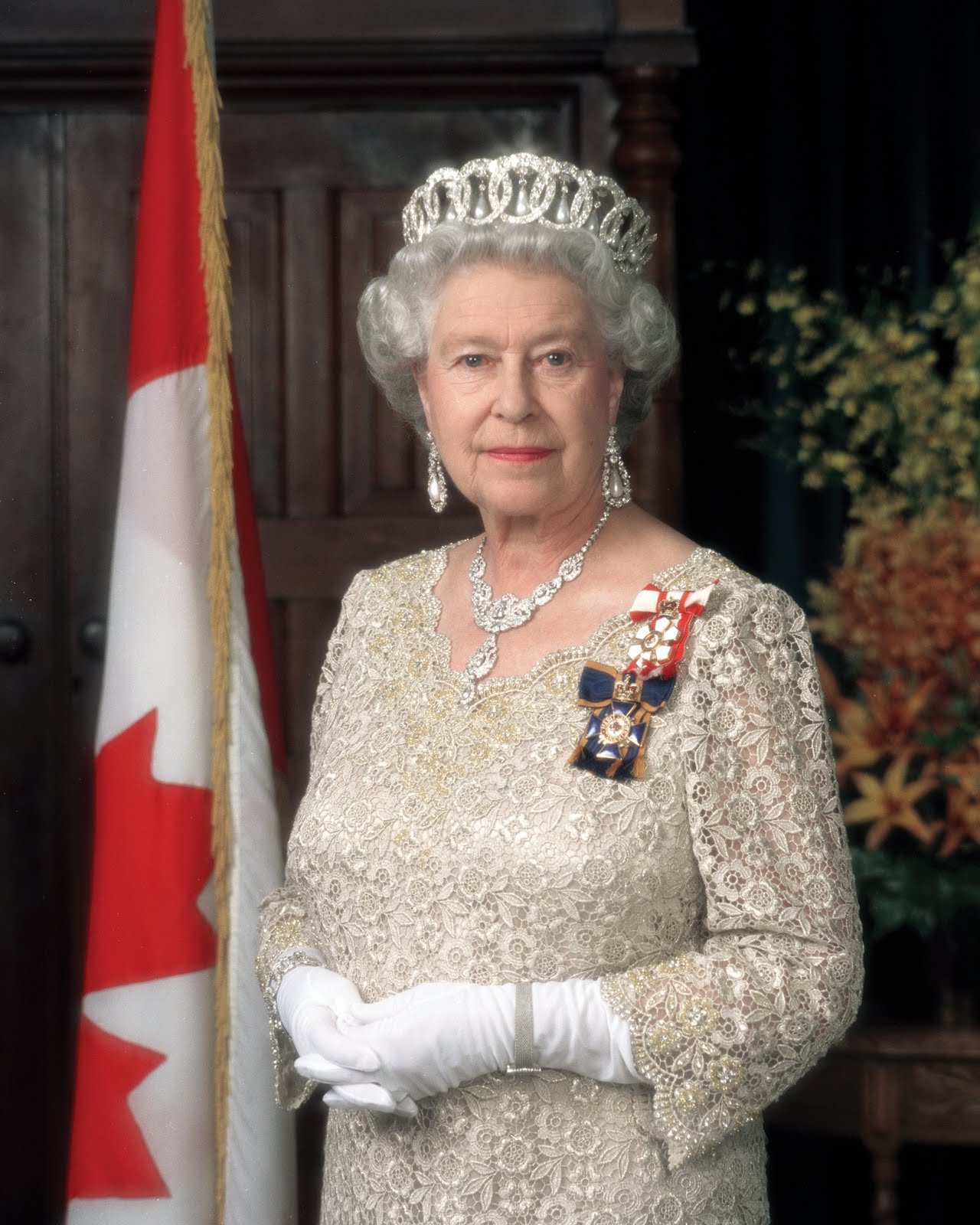 Queen Elizabeth II’s Diamond Jubilee has encouraged me to reflect on one of the key tenets of public choice theory: The principle that politicians and bureaucrats are the same self-interested individuals in their public capacities as in their private lives. One virtue of constitutional monarchy is that it serves as a brake — however imperfectly — upon political aggrandisement.


 Posts
Posts


