‘Nations stumble upon establishments, which are indeed the result of human action,
but not the execution of any human design.’
Adam Ferguson, An Essay on the History of Civil Society (1767)
Showing posts with label Constitutionalism. Show all posts

25 January 2017

On the Record | Supreme Court of Britain Insists That Brexit Vote Goes Through Parliament

Please see my latest wire for The New York Sun, ‘Supreme Court of Britain Insists that Brexit Vote Goes Through Parliament’:

Americans tired of presidential end runs around Congress will sympathize with the Supreme Court ruling out of London that Her Majesty’s Government cannot act alone but must pass legislation in Parliament before triggering Brexit negotiations to leave the European Union.

Following this summer’s referendum vote, Prime Minister May promised to initiate Article 50 of the Lisbon Treaty and begin procedural talks for EU withdrawal. Opponents challenged the government before the High Court in early November, arguing that the executive, by acting unilaterally, was usurping parliamentary sovereignty.

The Government countered that, through executive power based on the royal prerogative and buttressed by the majority vote, its Brexit plans were constitutional. The High Court thought otherwise and ruled against the Government, which in turn appealed to the Supreme Court.

Complications ensued when the constituent countries of the United Kingdom joined in the mid-December hearings, contending that Whitehall diktat threatened the equal prerogatives of Scotland, Wales, and Northern Ireland, which should have the right to consult on and veto future Brexit developments.

Read more . . .

__________

My thanks to editor Seth Lipsky of The New York Sun.

11 October 2016

On the Record | Trump’s Churchill Moment

Please see my latest post for the Quarterly Review, ‘Trump’s Churchill Moment’:

Donald Trump ‘explained’ Churchill to me. And, after the first Trump-Clinton presidential debate, Churchill reciprocated the favour.

The fame of Sir Winston Churchill, who served in several Cabinet offices and was twice prime minister, left me cold, for which I harboured feelings of shame and regret. His life and times certainly fascinated, but I was by no means a Churchill aficionado. Why did I not revere this Conservative hero as so many others did? Why did I not honour him as the greatest statesman of the twentieth century?

Definitely the man had a flair with words — his political speeches are highly quotable and his numerous biographies and histories written with a compelling simplicity. Indeed, Churchill was awarded the 1953 Nobel Prize for Literature for his multi-volume histories of the Second World War and of the ‘English-Speaking Peoples’.

Yet his political record was chequered. In 1900, Churchill entered Parliament as a Conservative representative, crossing the floor four years later to join the pro-free-trade Liberals. Not to be outdone, he re-crossed — and re-joined the Conservatives in 1924, saying famously: ‘Anyone can rat, but it takes a certain amount of ingenuity to re-rat.’

Fluid party identity was the least of Churchill’s sins. His achievements in government were blemished by failure: inept tactical planning during World War I; returning post-war sterling to the gold standard at unrealistic convertibility; helping to precipitate the General Strike; opposing independence for India; and even losing the 1945 election after denouncing Clement Attlee’s Labour platform for requiring ‘Gestapo-like’ measures. Oxford historian and sometime Tory MP, the late Robert Rhodes James, in his Churchill: A Study in Failure, 1900–1939, chronicled the general public’s ambivalent assessment of Sir Winston’s early career. Why, I wondered still, the universal acclaim?

Read more . . .

__________

The wire above was written before the release of Trump’s ‘locker room’ comments Friday (eleven years after they were caught on a ‘hot mic’) and before his stupendous second debate Sunday night against Hillary Clinton. Public support remains firm.

A Politico/Morning Consult poll conducted after the remarks were leaked ‘found that 74 percent of Republican voters said GOP leaders should stick by Mr. Trump’, The Washington Times recounts, while ‘about 41 percent told the pollsters that they would be more likely to support a candidate who continued to back Mr. Trump.’

Meanwhile, following Sunday’s debate, a ‘stunning’ new poll ‘showed Donald Trump has reclaimed the lead from Democratic opponent Hillary Clinton,’ The Times reports, ‘becoming the latest survey to suggest the GOP presidential nominee has put a bad month behind him.’ This latest CNN/ORC tally shows Trump enjoying a ‘2-percentage point lead in a national four-way race among likely voters’, with Republicans ‘likeliest to vote’ supporting Trump by 90 percent.

The ‘movement’ rolls on . . .

__________

My thanks to editor Dr Leslie Jones of the Quarterly Review.

06 June 2012

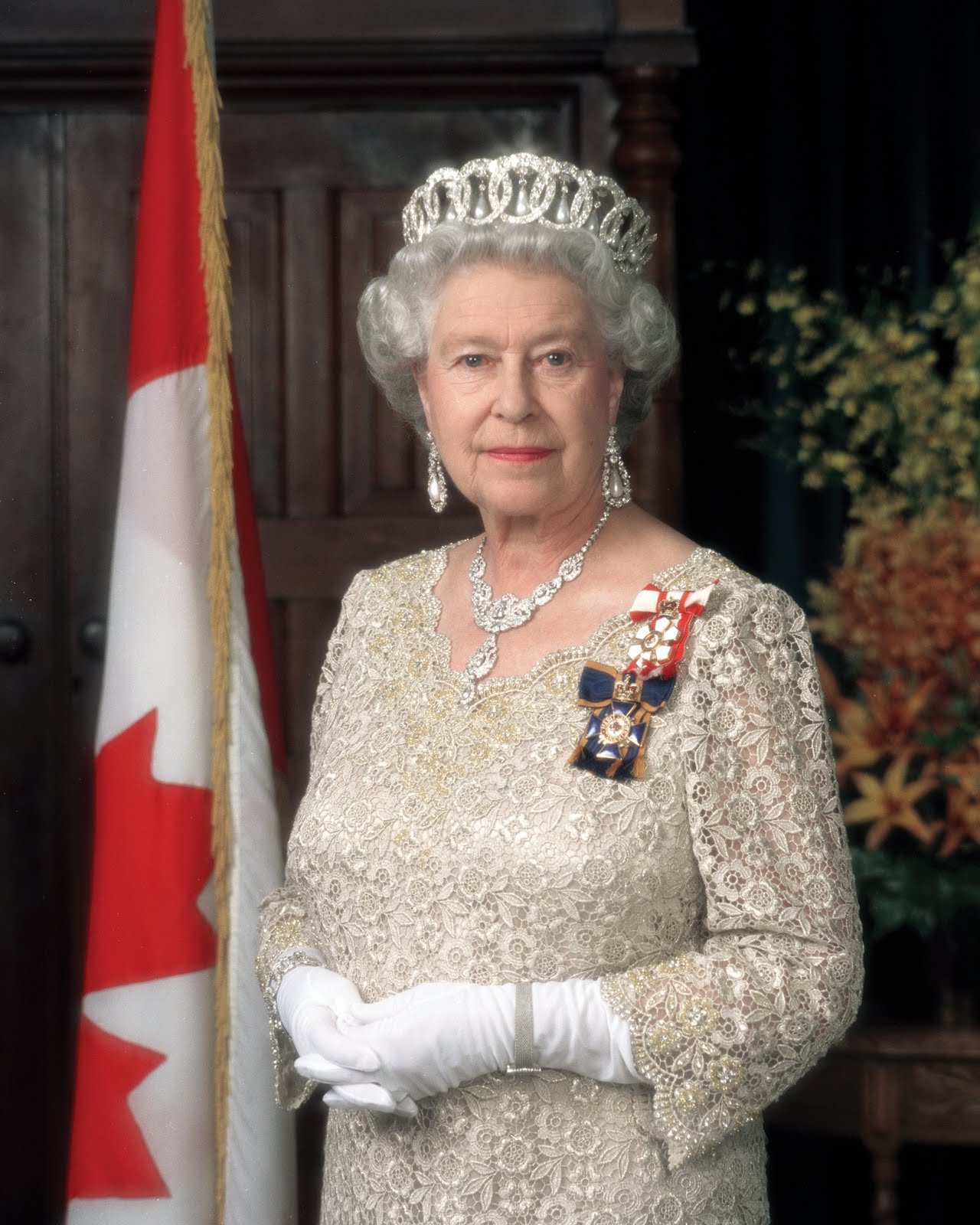
The Diamond Jubilee: A Cheer for Constitutional Monarchy’s Restraint on Government

Queen Elizabeth II’s Diamond Jubilee has encouraged me to reflect on one of the key tenets of public choice theory: The principle that politicians and bureaucrats are the same self-interested individuals in their public capacities as in their private lives. One virtue of constitutional monarchy is that it serves as a brake — however imperfectly — upon political aggrandisement.

From a quick survey, the reasons are twofold. First, politicians are jealous of their political powers to aggrandise all within their ambit, so embellishing the royal Head of State (unlike the practice of the American presidency) benefits neither them nor their masters, the electorate. Second, the Westminster parliamentary system itself forbids the prime minister is assume de jure (if not always de facto) all of the appurtenances that pertain to the Head of State.

On a more theoretical basis, Austrian economist Hans-Hermann Hoppe has examined the effectiveness of both monarchies and democracies to restrain the growth of government and, of the two, he credits the former with a better relative record for preserving individual liberties and fostering an atmosphere of economic prudence.

All of which leads me to wonder why classical liberals are so often enamoured of the republican ideal. One can understand their inability to appreciate a Tory reverence for tradition and continuity, yet why do they so cavalierly dismiss the public choice arguments which demonstrate that limited government in the age of the Welfare State is held hostage to democratic fortune?

To all who see in politics the culmination of human effort and the end of all earthly activity, this essay is written in tribute to the Roman slave who, while accompanying the conquering general in his chariot, held a wreath of laurel over the commander’s head while whispering into his ear, ‘Remember, you are only a man...’

Public choice theory reminds us to-day that in the absence of mindful supervision, the State and its servants are liable to aggrandise themselves while encroaching on our liberty.

Click here for my full argument at the Adam Smith Institute.


Commemorating the death of Sir John A. Macdonald (1891)

01 July 2011

Will the Canadian Crown Go the Way of Dominion Day?


To-day, the anniversary of 144 years of Confederation, is to be a day of national celebration and joyous good cheer. Far be it for me to introduce a note of gloom into the Canadian visit by their royal highnesses the Duke and Duchess of Cambridge. Yet for those who steadfastly persist in marking the occasion as Dominion Day, there is an underlying sombre message for Canada’s monarchical heritage.

For this far-flung northern country was once known as the ‘Dominion of Canada’, another testament to our propensity for compromise. The initial choice by the Fathers of Confederation was ‘Kingdom of Canada’, a fierce acknowledgement of our British connexion and, we may assume, a way of distinguishing ourselves from the Republic (and indigenous republican sentiments) to the south.

Yet a British official at the time — and remember, this was soon after the end of the American Civil War and during continuing Fenian raids across the border — thought this was needlessly provocative, and so an alternative nomenclature was called for:

It was desired to call the confederation the Kingdom of Canada, and thus fix the monarchical basis of the constitution. The French were especially attached to this idea. The word Kingdom appeared in an early draft of the bill as it came from the conference. But it was vetoed by the foreign secretary, Lord Stanley, who thought that the republican sensibilities of the United States would be wounded. [...] There is a story, probably invented, that when ‘Dominion’ was under consideration, a member of the conference, well versed in the Scriptures, found a verse which, as a piece of descriptive prophecy, at once clinched the matter: ‘And his dominion shall be from sea even to sea, and from the river even to the ends of the earth.’1
And so, every July 1st became ‘Dominion Day’ in honour of the Dominion of Canada. That is, until 1982, when a private member’s bill was passed in the House of Commons, under dubious circumstances, changing the name to ‘Canada Day’. It appears innocuous enough, except if seen in the context of a concerted effort to deny and rewrite Canadian history. Witness other egregious examples, the Red Ensign making way for ‘Pearson’s pennant’ and the renaming of the British North America Act, 1867 to the Constitution Act, 1867.

A distinctly Canadian designation, crafted on these shores (and not engineered specifically from Westminster and Whitehall) succumbed to bland political correctness. It is an inconceivable patriotic sabotage in other countries, proud of their national heritage. Try to imagine ‘Independence Day’ giving way to ‘America Day’, or ‘Bastille Day’ becoming ‘France Day’.

This blatant exercise of historical social engineering at the hands of government fiat was resolutely fought by Canadians proud of their unique heritage, but protests and umbrage faded with the passing of years. The Globe and Mail’s editorial board was one of the last hold-outs, but even it too succumbed to what it considered the inevitability of progress.

David Warren, columnist for The Ottawa Citizen, is among the last public personalities who will take a stand. In 2006 he wrote,

I like to start all Dominion Day columns with a renewed expression of outrage for how the Trudeau government did in this fine proud word, ‘Dominion’, in 1982, as part of a longer-running Liberal Party effort to flush our national heritage ... I remain, as I was born, a native of the Dominion of Canada, and this is our Dominion Day, to which there is so much more than paper Pearson flags, and picnic faces painted in red maple lipstick.
‘I will not, and vow I will never, call it “Canada Day” without inverted commas,’ Warren asserted again in 2009. ‘It would not matter to me if every other living Canadian called it that without further thought. It continues to be Dominion Day, in my view: the patriotic anniversary of my own country. God Himself cannot rewrite history; I recognize no Act of Parliament that attempts to do so.’

Now, it may be wondered, what does all this have to do with the 2011 Royal Tour and the continuing relevance of the Crown to Canada’s constitutional stability? Didn’t the warm, jubilant crowds that flocked to the arrival of Prince William and his bride demonstrate our enduring love and respect for monarchy? Didn’t the celebrations on Parliament Hill put to rest any continuing fears about the Crown’s role in Canadian politics and culture?

Well, Dominion Day itself was once proclaimed and cheered by the Canadian people and, by a simple Act of Parliament and a deluge of government propaganda, all that changed. The future of the royal tradition in Canada rests upon equally uncertain foundations. At best, only half favour the Crown’s continuing role in Canada, and support at the time of the succession of the next crowned monarch does not look promising. When interviewed yesterday by roving reporters, spectators who had turned out to watch the arrival of the Duke and Duchess most often alluded to the celebrity nature of the royal couple — their glamour, their youthfulness, their fashion sense — with few acknowledging the constitutional ties and imperatives. Behind the façade of enthusiasm lies disquieting complacency.

Constitutional monarchists must be ever vigilant, especially since the Crown is more than the Head of State, but is at the apex of a governing system that guarantees the personal liberties and natural rights of all Canadians.

God Save the Queen! Happy Dominion Day!

ENDNOTES

1. A.H.U. Colquhoun, The Fathers of Confederation: A Chronicle of the Birth of the Dominion (Toronto: Glasgow, Brook & Co., 1920), 128-29. The Father of Confederation in question was Samuel Leonard Tilley, premier of New Brunswick. This Biblical passage is also the obvious source of the Canadian motto, ‘a mari usque ad mare (Zechariah, 9:10)’.

04 May 2011

Tradition Is the Anchor of Royal Succession

The Royal Wedding last week between Prince William and Kate Middleton has led to renewed interest in the line of succession, which has hitherto followed the example of primogeniture, with the Crown passed onto the eldest son. This practice has been criticised as antiquated and sexist; reforms have been proposed whereby the first-born becomes first-in-line, whether the child is male or female.

Yet as innocuous as this change in the royal succession may appear, there are inherent dangers. Tradition is one of the Crown’s greatest assets, and this reform strikes at the heart of Britain’s (and the Royal Commonwealth’s) constitutional strength: the stability which the Crown imparts to political life which, in turn, is a key raison d’être for the monarchy itself.

In an essay written for the independent British think-tank ResPublica, I examine some of the ramifications and unintended consequences to reform of the royal succession and urge caution before any such innovations are undertaken — with apropos quotations from Edmund Burke and Benjamin Disraeli.

Thanks to Phillip Blond and Adam Schoenborn for allowing me an opportunity to express opinions that run counter to the prevailing zeitgeist, but which I believe deserve a hearing before reforms to the royal succession are implemented.

Click here for my full argument.