‘Nations stumble upon establishments, which are indeed the result of human action,
but not the execution of any human design.’
Adam Ferguson, An Essay on the History of Civil Society (1767)
Showing posts with label Queen Elizabeth II. Show all posts

31 January 2020

On the Record | Brexiteers Don’t Want Democracy; They Want Freedom

Please see my January 30th wire for The American Spectator, ‘Brexiteers Don’t Want Democracy; They Want Freedom’:

When the United Kingdom exits the European Union late on Friday, Brexit will be hailed as a victory for British democracy. Three times Britons voted to leave the EU and “take back control”: in June 2016, when the Leave campaign won at the EU referendum; in the general election the following June, when the vast majority of voters cast ballots for parties promising to fulfill the referendum will of the people (even though the Conservative party itself only achieved a minority government); and finally in December 2019 — the second general election in as many years — after months and months of Remainer parliamentary obstruction, Britons overwhelming elected Boris Johnson on the pledge to “get Brexit done.” Third time’s the charm.

But is this really a victory for democracy? Yes, on the face of it, if by democracy you mean one person, one vote. On the other hand, Britons were subjected, figuratively and literally, to months of their elected representatives in the House of Commons hell-bent on frustrating that self-same will, all in the name of parliamentary democracy.

The prime minister and no less than Elizabeth II, fulfilling their legitimate constitutional powers to prorogue Parliament, were vetoed by an unaccountable UK Supreme Court, “miraculously” imbued with the ability to augur that the Head of State and her First Minister were motivated by malevolent intent against democracy. Thus vetoed, Boris Johnson was forced to return to the Commons, cap in hand, to the repellent glee of Remainers. Brexiteers were rightfully outraged, while the establishment was unconvincingly nonplussed. They hear “the fury in your words, but not your words,” to summon up Shakespeare.

What is it about democracy that Brexiteers dislike? Most would never put the question so bluntly and, if queried, would proclaim themselves the most proud and patriotic democrats in all of England. Except … Why do politicians and more perniciously, “public” servants, put their interests above those whom they have sworn to serve?

Were justification required, we could put the blame on Edmund Burke, who infamously told his Bristol electors that MPs “owe you, not his industry only, but his judgment.” Furthermore, “he betrays, instead of serving you, if he sacrifices it to your opinion,” Burke protested.

Burke’s political nostrum, however, had its limits even in his own day, let alone in ours. In truth, we need go no further than to admit that public officials are usually no more “public-spirited” than the general run of the populace. Perhaps even less so.

Brexiteers who are fully committed to British independence don’t stop at limiting the power of Brussels. They’ll extend it to Westminster, too.

Read more . . .

Remarks are welcome on DMI’s Facebook page.

__________

My thanks to editor Wlady Pleszczynski of The American Spectator.

29 January 2020

On the Record | Beware of Supposing Brexit’s Cause Is Won

Please see my January 27th wire as Brexit diarist for The New York Sun, ‘Beware Of Supposing Brexit’s Cause Is Won’:

“Can we easily leave the remains of such a year as this? It is all still gold,” the diarist Horace Walpole wrote as Great Britain won conquest after conquest, at France’s expense, during the final months of the Seven Years’ War. “Our bells are worn threadbare with ringing for victories.”

Yet much to the disappointment of Brexiteers, “Big Ben,” which crowns that iron choir atop the Elizabeth Tower, will “not” sound out at 11 p.m. when the United Kingdom takes its leave of the European Union and regains independence.

“What we obtain too cheap, we esteem too lightly,” the Anglo-American revolutionary, Thomas Paine, wrote in the opening of “The Crisis.” “ ’Tis dearness only that gives everything its value.”

No one can claim that Brexiteers have had an easy time of it. Eurosceptics exposed the insidious nature of EU membership from the beginning. Prime Minister Thatcher marked the turning point with her “Bruges Speech” of September 1988, in which she famously declared: “We have not successfully rolled back the frontiers of the state in Britain, only to see them re-imposed at a European level with a European super-state exercising a new dominance from Brussels.”

The ups and downs on the road to Brexit are too numerous to count. There was the successful June 2016 referendum to “take back control,” followed by the disastrous premiership of Theresa May, whose decision to go to the polls precipitously in June 2017 nearly ended Brexit. The resulting “Remainer Parliament” was perhaps its worst outcome — second only to Mrs. May’s compromised Withdrawal Agreement. Remainer MPs, meanwhile, kept the Tory Government tied up in knots and subject to the whims of Westminster.

In this dark hour for British independence, arises its paladin premier, Boris Johnson, who on the charge of “getting Brexit done” won electoral victory in December. The promise was that come January 31, the UK would be out of the EU. And so it is about to come to pass.

Read more . . .

Remarks are welcome on DMI’s Facebook page.

__________

My thanks to editor Seth Lipsky of The New York Sun.

25 December 2019

On the Record | Elizabeth II, in Christmas Speech, Fails to Say ‘Brexit’

Please see my latest wire as Brexit diarist for The New York Sun, ‘Elizabeth II, in Christmas Speech, Fails to Say “Brexit” ’:

What is to be made of the fact that the British monarch failed in her Christmas address — the sixty-eighth of her long reign — failed to mention the fact that the United Kingdom of which she is the sovereign is about to end its membership in the European Union and become truly independent once again? It is, after all, far and away the most important development for Britain in the year Her Majesty is reviewing for the holiday. Is there method to her silence on this head?

The question invites reflection because seldom can Elizabeth speak so freely, as she can in her Christmas speech, to her subjects in the United Kingdom and across the Commonwealth, including men and women of good cheer around the globe. Her grandfather, George V, began the tradition in 1932, when he used the wireless to reach out to the farthest corners of the British Empire upon which, went the boast, “the sun never set.”

Now, the Queen sends season’s greetings via radio, television, and the world wide web. The Christmas broadcast is Her Majesty’s royal review of the year just past and appraisal of the year to come. In 2019 — as for much of the last three years — top of mind has been the fate of Britain’s independence from the European Union. As Elizabeth surveys the receding twelvemonth, she characteristically eschews hyperbole, merely calling its consequences “quite bumpy.”

Come the end of January — barring catastrophe — the UK will at long last leave the EU. It might seem only natural that the Queen, as Head of State, should want to address the effects of Brexit upon her people. Yet nowhere does she mention it directly, nor, for that matter, any political development — whether it be December’s General Election or the summer appointment of her fifteenth prime minister, Boris Johnson, during her 67-year reign (beginning with Sir Winston Churchill).

Not a word about Brexit. In part Her Majesty’s reticence is due to constitutional convention, in which the Crown forsakes the grubby details of politics to the government, rising above the fray and serving as an unbiased sovereign for all. Nor can one imagine that the Brexit path is one on which the Queen would be eager to tread, so stressful are relations between Leavers and Remainers. The acrimony arising from the election, the culmination of years of recriminations, suggests that few want Brexit to intrude upon festivities of Christmas and Chanukah.

We mere commoners, though, may spare a thought as we stare at the Yule log blazing on the hearth or the Chanukah candles, for what the Queen herself thinks of Brexit.

Read more . . .

Remarks are welcome on DMI’s Facebook page.

__________

My thanks to editor Seth Lipsky of The New York Sun.

19 December 2019

On the Record | The Queen Backs Brexit, After All

Please see my latest wire as Brexit diarist for The New York Sun, ‘The Queen Backs Brexit, After All’:

“My Government’s priority is to deliver the United Kingdom’s departure from the European Union on 31 January,” Her Majesty intoned at the State Opening of Parliament. “My Ministers will bring forward legislation to ensure the United Kingdom’s exit on that date and to make the most of the opportunities that this brings for all the people of the United Kingdom.”

Elizabeth II vowed that her Government would “seek a future relationship with the European Union based on a free trade agreement that benefits the whole of the United Kingdom.” Then, with an eye to America and other national markets, she announced they will also “begin trade negotiations with other leading global economies.”

No doubt, Her Majesty reflected, she’s said all this before. Still, her kingdom remains tethered, inexplicably, to the EU. What’s changed? Boris Johnson is prime minister, now with a majority parliament standing foursquare behind him and Brexit.

The Queen’s Speech is a yearly overview of the government’s agenda, presenting in broad brushstrokes its objectives in office; sometimes even coinciding, wits whisper, with electoral manifestos. Such laundry lists of pending legislation can range from the transformational, like the UK seceding from EU membership, to the mundane, as when the Queen announced reviewing “hospital car parking charges.”

Like any political document, the speech has its share of boilerplate, whether it be “an ambitious program of domestic reform,” a commitment “to invest in our gallant Armed Forces,” or a promise “to promote and expand” the UK’s “influence in the world.” No constituency is left untouched, whether it be health, education, social care, crime, or the environment. Such are the demands and expectations of modern participatory democracy.

Conservative governments are not exempt from the spending spree, even when they should know better. Such as when Boris Johnson’s ministry pledges to increase the “national living wage,” regardless of whether it benefits the poor.

Theory demonstrates that minimum wage policies put people out of work — usually the marginal worker and those new to the workforce — without the experience or seniority to climb the employment ladder. Statistics bear this out, too, here in the Northeast and on the Coast where restaurant workers are particularly vulnerable to “virtue signalling.”

Likewise with climate change strategy. Pity the Queen for having to assert that Her Government will “take steps to meet the world-leading target of net zero greenhouse gas emissions by 2050” — heedless of the hardships this creates. The UK petroleum industry is exposed to opprobrium, manufacturing will meet increasing energy expenditures (eventually conveyed to consumers), and Britons will brave rising heating bills. Need one add that the “consensus” on climate change, calling forth these measures, has challengers?

Greater consensus will coalesce around Mr. Johnson’s efforts to “invest in the country’s public services and infrastructure,” while simultaneously “keeping borrowing and debt under control.” Conservatives keen to the failures of Keynesian deficit spending will wince at their party’s abandonment of Margaret Thatcher’s focus on economy, despite the Prime Minister’s pledge for “the sustainability of the public finances through a responsible fiscal strategy.”

On this head, Brexit is the secret weapon for economic growth.

Read more . . .

Remarks are welcome on DMI’s Facebook page.

__________

My thanks to editor Seth Lipsky of The New York Sun.

09 December 2019

On the Record | Brexit: What Would Patrick Henry Do?

Please see my mid-November wire as Brexit diarist for The New York Sun, ‘Brexit: What Would Patrick Henry Do?’:

With the British general election having only just begun, it would be precipitate for champions of UK independence to bemoan, “Brexit, we hardly knew ye.” Yet as events continue to unfold, it is difficult to maintain the requisite “stiff upper lip” until December 12.

One need look no further for ominous signs ahead than when Prime Minister Johnson went to Buckingham Palace last Wednesday to request the dropping of the writs. “I’ve just been to see Her Majesty the Queen,” Boris announced outside No 10, “and she agreed to dissolve Parliament for an election.”

Yet a BBC reporter outside the Palace confidently told viewers that Mr. Johnson had gone “to inform” the Queen that Parliament was dissolved, as that’s how things are now done. First, the UK Supreme Court overruling the Queen’s prorogation of Parliament in September; and now, a member of the press assuring us that dissolution was no longer among her prerogative powers, either.

So who does rule in the United Kingdom? This question is at the core of the election campaign, as at the heart of Brexit. Since Prime Minister Theresa May brought her Brexit legislation before the Commons a year ago, MPs have been hell-bent on frustrating the people’s will, expressed in the 2016 referendum, to leave the European Union. Boris Johnson called that June 23 Britain’s “Independence Day,” but in reality it’s been more John Dickinson than John Adams.

America’s Founders pledged in their famous document “our Lives, our Fortunes, and our sacred Honor.” Like Mr. Dickinson who counselled that the time was not yet ripe for the colonies to separate from Britain, the Conservative government is falling back on a weak deal. As many Brexiteers revile it as revere it, as the answer to secession from the EU.

Prime Minister Johnson proclaims it, yet that fails to soothe sceptics, who fear it as not worth the parchment upon which it is written.

Read more . . .

Remarks are welcome on DMI’s Facebook page.

__________

My thanks to editor Seth Lipsky of The New York Sun.

31 August 2019

On the Record | Bumpy Ride Lies Ahead for Brexit

Please see my latest wire as Brexit diarist for The New York Sun, ‘Bumpy Ride Lies Ahead for Brexit’:

As Westminster politicians prepare to resume their Brexit deliberations next week following the summer recess, one can only quote the inimitable Bette Davis: “Fasten your seat belts; it’s going to be a bumpy night.” Only in the case of Brexit, many more bumpy days and nights before October 31 and Britain’s exit from the European Union becomes finalized.

Britons and the world witnessed an amazing about-face once Theresa May left office and Boris Johnson assumed the mantle of Prime Minister. Brexit was no longer treated as an embarrassment and a regret. Brexit became an opportunity, a chance for a British renaissance.

No wonder. Boris, after all, claimed that the 2016 referendum to regain Britain’s sovereignty was in reality its own “Independence Day.” He is, to all those in thrall to the EU, their worst nightmare. Gone is Mrs. May’s supplication to Brussels officialdom and her intransigence to Britons’ desire for self-government.

Britain’s indefatigable paladin is now “in the house” — 10 Downing Street.

Boris’s vow to bring Britain out of the EU on October 31, “do or die,” deal or no deal, was the ultimate insult to EU votaries whose outsized self-assurance can brook no resistance. Certainly not from a mere Prime Minister — nor to the people’s cause of self-government whose champion Mr. Johnson became.

Read more . . .

Remarks are welcome on DMI’s Facebook page.

__________

My thanks to editor Seth Lipsky of The New York Sun.

21 July 2019

On the Record | Anti-Brexit Britons Turn on the Queen

Please see my latest wire as Brexit diarist for The New York Sun, ‘Anti-Brexit Britons Turn on the Queen’:

Could Queen Elizabeth II become a pawn in the Brexit drama? In their latest bid to frustrate Britain’s independence from the European Union, Remainers are rumored to be considering enlisting Elizabeth II as an envoy to Brussels “to plead” for delay.

So reports Breitbart London in respect of the most recent plot to stymie Britain’s exit from the grip of Brussels mandarins. Three years since a clear majority voted to leave, efforts to betray the will of the people and remain subservient to the EU grow more desperate as the “latest” exit date of October 31 nears.

That new leadership is due in Downing Street only heightens the likelihood that Britain will be out, come Hallowe’en. That the incoming premier will ask the Queen to end — or prorogue — the current Parliament and thus ensure Brexit doubtless contributes to this competition for royal favor.

Is the irony lost on no one? Britons’ principal reason to leave is based on the EU’s growing appetite for power, morphing into a “super-state,” evolving its own prerogatives, betraying the original plan to pool together sovereign European states for limited projects of mutual benefit.

Of those powers Brexiteers want to claw back, top of the list is Britain’s ability to craft its own regulatory parameters, negotiate trade deals, oversee border security, and legislate free from Brussels oversight. To wit, to restore sovereignty to Westminster and, not so incidentally, the Queen.

After all, she is the United Kingdom’s “Head of State.” All laws are enacted in her name. Her ministers swear fealty to her. Her “subjects” send representatives to Parliament to help her govern the nation.

Even Boris Johnson would — if he does, as seems likely, emerge as the next Conservative prime minister once leadership ballots are counted early this week — visit Buckingham Palace to receive his appointment as Elizabeth’s “first minister” and “kiss hands” with his sovereign.

Brexit would be no less a victory for Britain’s constitutional monarchy than for the British people. The Queen was never more a mere “figurehead” than when ultimate responsibility of key national issues was decided far from Albion.

Read more . . .

Remarks are welcome on DMI’s Facebook page.

__________

My thanks to editor Seth Lipsky of The New York Sun.

15 March 2019

On the Record | Brexit, Beware Ides of March Portend Trouble

Please see my latest wire as Brexit diarist for The New York Sun, ‘Brexit, Beware Ides of March Portend Trouble’:

“Infamy, infamy, they’ve all got it in for me.” Fans of British comedy will recognize the cry from Kenneth Williams’s portrayal of Julius Caesar. Brexiteers take the sentiment personally, too — especially on this “Ides of March.” Britain’s political class has it in for British independence.

Brexit had a dismal week. First, the Prime Minister’s withdrawal plan endured its second defeat on Tuesday. Efforts were earnestly made to convince MPs that attempts to address the Irish border issue did not trap Britain in the EU customs union, but failed on the merits.

“No deal” Brexit went down the following day. This is particularly galling to purist Brexiteers, who see future trade agreements with Europe based on WTO guidelines as Britain’s only way to achieve true freedom. The Wall Street Journal, initially opposed to Brexit, acknowledged this week that a no-deal exit “may be the best outcome now.”

Brexit’s “unkindest cut of all” came Thursday, when parliamentarians voted to ask the EU for an Article 50 extension. If granted, the March 29 deadline is shattered. Independence may be fatally compromised.

Can Brexit be saved? Caesar’s augurer has as much chance of foreseeing the future of British independence as any political prognosticator. Let’s examine the entrails of this week for clues.

Read more . . .

Remarks are welcome on DMI’s Facebook page.

__________

My thanks to editor Seth Lipsky of The New York Sun.

05 July 2018

On the Record | President Trump’s Brexit Opening

Please see my latest wire for The American Spectator, ‘President Trump’s Brexit Opening’:

London in July, and more than an unusual summer heat wave awaits Britain’s prime minister Theresa May. The Brexit timetable is “hotting up” as ministers prepare to finalize the Government’s list of demands for Brussels, while restive Conservative MPs jostle for position to defenestrate their leader once the European Union deal is done. As tensions heighten, can President Trump offer respite to his beleaguered British counterpart?

The Cabinet meets this Friday at the premier’s country retreat at Chequers, where they will thrash out the Government’s white paper setting out the objectives for its future social, economic, and security relationship with Europe. Too little, too late, is the general consensus, as the formal Brexit separation takes place next March: while various measures and proposals have been drawn up and discussed desultorily, none have benefited from rigorous analysis, and now Brexiteers are fearful that the Cabinet will be presented with a fait accompli, take-it-or-leave-it Damoclean sword dangling over their heads.

Rumors circulate, for instance, that Mrs. May will propose abiding by European single market rules for goods, leaving the corollary of free movement of labor for the UK-EU negotiating table — ostensibly on the grounds that, as the United Kingdom currently abides by these regulations, this trade component can be quickly agreed by the two parties. Yet her critics argue that this concession empowers the EU to continue dictating terms, frustrating British attempts to innovate and compete for international trade agreements. Brussels mandarins, who habitually voice their disdain for Britain’s “independence” initiative, have no incentive to coöperate and encourage discontent on the Continent. They regularly back-foot Mrs. May and her Brexit ministers.

“Nothing durable can be accomplished without the impulse of general concurrence,” wrote Germaine de Staël, during those unfortunate “eras in history when the course of national feeling is dependent on a single man.” Woe to Britain that its fate rests with Theresa May, unloved by Conservatives, and overwhelmed and underwhelming on the Brexit file.

Read more . . .

__________

My thanks to editor Wlady Pleszczynski of The American Spectator.

21 June 2017

On the Record | Elizabeth makes it official: The Queen backs Brexit and independence

Please see my latest wire as Brexit diarist for The New York Sun, ‘Elizabeth makes it official: The Queen backs Brexit and era of independence’:

“My government’s priority is to secure the best possible deal as the country leaves the European Union.” With these words Queen Elizabeth today officially opened the 57th Parliament. With the first session scheduled to last two years, it should give the Conservative government sufficient time to concentrate on exiting the European Union by March 2019. So the British ship of state has cleared its decks for Brexit.

As if to emphasize the seriousness of the moment, the State Opening lacked the pomp and circumstance of past years, with the Imperial Crown simply carried in procession and Her Majesty, foregoing the state coach to arrive by limousine and wearing not her ceremonial regalia but a bright blue dress and matching hat. The speech itself was a model of brevity, listing in curt succession the future agenda of the Government.

Many of the economic consequences of Brexit were foreshadowed by the speech of the Chancellor of the Exchequer, Philip Hammond, to the Mansion House yesterday. Clearly stung by the results of a snap election meant to strengthen Prime Minister May’s hand, not weaken it, Mr. Hammond admitted that Tories “must make anew the case for a market economy and for sound money” and how “stronger growth must be delivered through rising productivity” as “the only sustainable way to deliver better public services, higher real wages and increased living standards.”

The Chancellor then delivered the strongest case for Britain’s independence — away from the European Union and toward global opportunities: “That means more trade, not less; maintaining our strong trade links with European markets after we leave the EU, as well as seeking out new opportunities for trade and investment with old friends and fast growing emerging economies alike.”

Read more . . .

__________

My thanks to editor Seth Lipsky of The New York Sun.

19 June 2017

On the Record | Independence gets lift from Britain’s monarchy as Brexit talks begin

Please see my latest wire as Brexit diarist for The New York Sun, ‘Independence gets lift from Britain’s monarchy as Brexit talks begin’:

“The world is your oyster.” So opined Britain’s former trade envoy, Prince Andrew, the Duke of York. Asked about UK firms’ attitude toward Brexit, the Duke spoke of their guarded optimism. “You can either look at it as a glass half-empty — which is: ‘Oh my God, why have we done this?’ Or you could look at it as a glass half-full, which is: ‘Okay, that’s where we are. There are opportunities that we’ve got to make.’ So . . . you may lose one thing but you may gain something else.”

Fleet Street is not remiss in reporting this as the first major intervention on the EU exit by a senior member of the Royal Family. But as The New York Sun editorialized March last year as “Elizabeth’s Finest Hour,” the Queen herself “backs Britain leaving the European Union.” This story was confirmed in December, when a BBC reporter revealed that Her Majesty had at a luncheon retorted, “I don’t see why we can’t just get out. What’s the problem?”

Her Majesty will start to get answers today, as her Minister of the Department for Exiting the European Union, David Davis, meets with his continental counterpart, Michel Barnier. Meetings will continue throughout the summer and autumn, with parties drawing up exit plans in Whitehall and Brussels each month, and conferring together once a week about progressing UK-EU negotiations.

EU bureaucrats may have thought that, with Britain’s ruling Conservatives weakened after a failed electoral gambit and reduced to a hung Parliament, the oyster was theirs for the eating. But, true to form, they have misread the British people’s determination for freedom.

Read more . . .

__________

My thanks to editor Seth Lipsky of The New York Sun.

06 June 2012

The Diamond Jubilee: A Cheer for Constitutional Monarchy’s Restraint on Government

Queen Elizabeth II’s Diamond Jubilee has encouraged me to reflect on one of the key tenets of public choice theory: The principle that politicians and bureaucrats are the same self-interested individuals in their public capacities as in their private lives. One virtue of constitutional monarchy is that it serves as a brake — however imperfectly — upon political aggrandisement.

From a quick survey, the reasons are twofold. First, politicians are jealous of their political powers to aggrandise all within their ambit, so embellishing the royal Head of State (unlike the practice of the American presidency) benefits neither them nor their masters, the electorate. Second, the Westminster parliamentary system itself forbids the prime minister is assume de jure (if not always de facto) all of the appurtenances that pertain to the Head of State.

On a more theoretical basis, Austrian economist Hans-Hermann Hoppe has examined the effectiveness of both monarchies and democracies to restrain the growth of government and, of the two, he credits the former with a better relative record for preserving individual liberties and fostering an atmosphere of economic prudence.

All of which leads me to wonder why classical liberals are so often enamoured of the republican ideal. One can understand their inability to appreciate a Tory reverence for tradition and continuity, yet why do they so cavalierly dismiss the public choice arguments which demonstrate that limited government in the age of the Welfare State is held hostage to democratic fortune?

To all who see in politics the culmination of human effort and the end of all earthly activity, this essay is written in tribute to the Roman slave who, while accompanying the conquering general in his chariot, held a wreath of laurel over the commander’s head while whispering into his ear, ‘Remember, you are only a man...’

Public choice theory reminds us to-day that in the absence of mindful supervision, the State and its servants are liable to aggrandise themselves while encroaching on our liberty.

Click here for my full argument at the Adam Smith Institute.


Commemorating the death of Sir John A. Macdonald (1891)

01 July 2010

A Royal Example for Progressive Conservatism

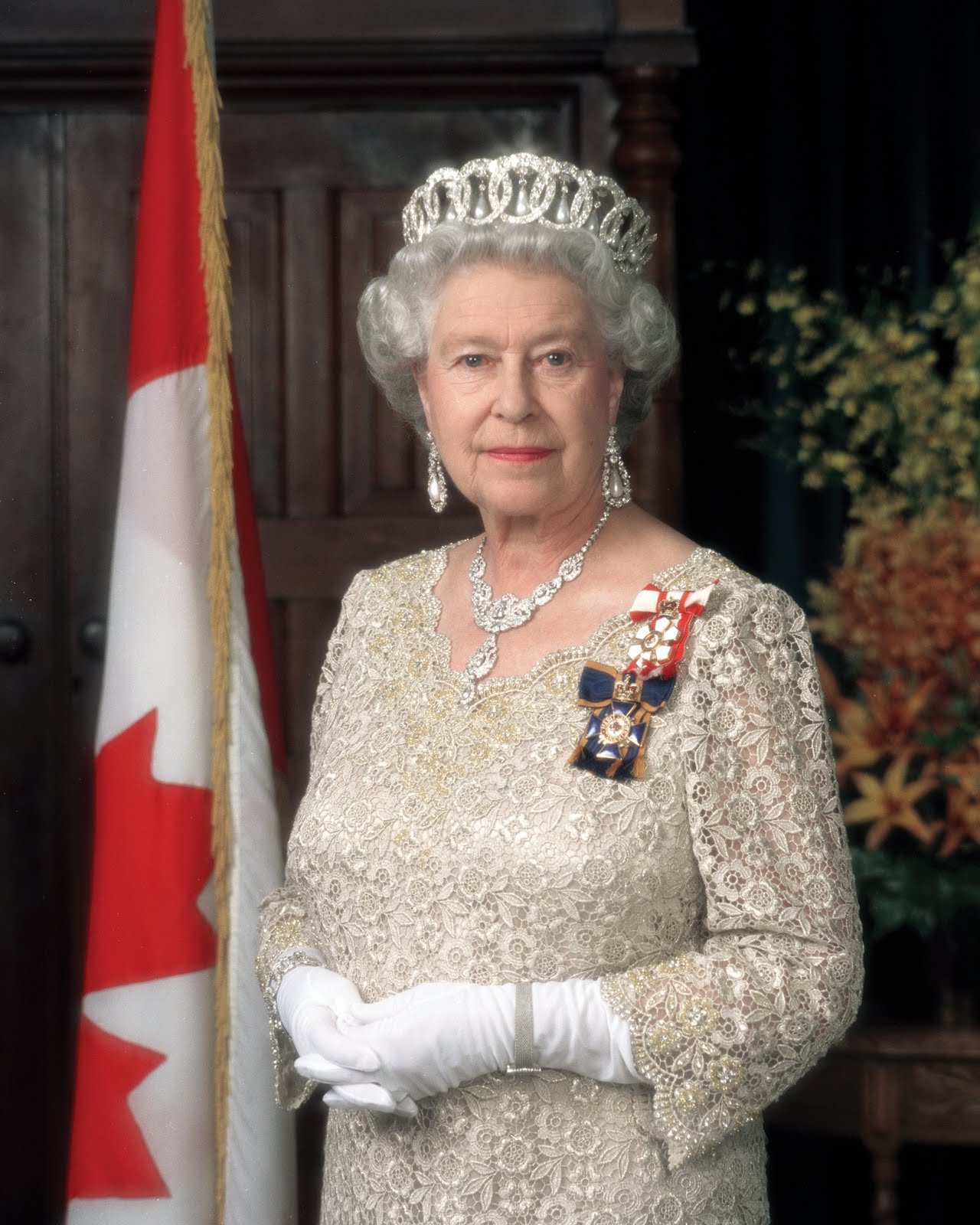
This week, the Queen began a week-long homecoming to Canada. On the 1st of July, she and the Duke of Edinburgh will be in the nation’s capital to celebrate Dominion Day, marking 143 years since the enactment of the British North America Act and Canadian Confederation.

Yet the United Kingdom and Canada have more in common than Queen Elizabeth II and constitutional monarchy: the rule of law, parliamentary government, and inter-twined histories are just a few political realities shared by these two Commonwealth members (and countless others). Both countries are also witness to the successful exploits of One Nation Tory politics—‘progressive conservatism’—of which the Victorian prime ministers, Benjamin Disraeli and Sir John A. Macdonald, were master practitioners.

The monarch, serving in Walter Bagehot’s ‘dignified capacity’, is above the hurly-burly of partisan politics, and offers to all parties the benefit of its accumulated wisdom, signified by its prerogatives rights to be consulted, to encourage, and to warn. ‘The nation is divided into parties, but the crown is of no party.’ Nevertheless, the monarchy represents two ideals that have especial resonance for progressive conservatism: limited government and the obligatory State.

Limited government, as historians will attest, is predominantly a Whig tenet. But when the alternative on the political spectrum is the all-encompassing State, setting limits to legitimate government becomes no less a conservative principle, too. King Louis XIV is rumoured to have boasted, ‘L’état, c’est moi’, setting up visions of material and financial rapacious as the ends of absolute monarchy, though this is not necessarily the case, according to Hans-Hermann Hoppe.

Professor Hoppe is a libertarian economist (or ‘anarcho-capitalist’) and, true, if he had his druthers, there would be no State at all, but simply free people co-operating voluntarily amongst themselves. That being said, he believes that monarchical government has a valuable lesson to teach democracies: ‘if one has to choose between two evils, a monarchical state or a democratic state, then monarchies have certain advantages.’

Because everybody knew I cannot become a king, there was resistance against attempts on the part of kings to increase taxes and to increase exploitation of their subjects. Under democracy, the illusion arises that we all rule ourselves even though it should be perfectly clear, of course, that also under a democracy there exists rulers and people who are ruled. But because of the fact that everybody can potentially become a public employee, the illusion of “we rule ourselves” arises and this then leads to a reduction of the resistance that existed vis-à-vis kings when it came to the attempt of increasing tax revenue.

A king sits on the throne with only the impediments of old age to curtail the longevity of his reign; he views public lands as personal property, to be passed on to his heirs, and tends it with care and with an eye for its future prosperity. Likewise, his subjects, knowing that they will never directly partake of the royal bounty, are jealous of their own property rights. A relationship of mutual (if wary) respect is established, which is reflected in restricted policies of appropriation and aggression: an overzealous king must always fear the loss of popular support and ensuing revolution. Monarchy thus inculcates, after its own fashion, the conservative beliefs in personal freedom, property ownership, and the modest State.

In a democracy, however, the tension between rulers and ruled is weakened, since it is widely held that ‘we are the government’. The limited government that constitutes the relationship of king and people morphs into the unlimited government of citizen legislators. Elected officials, holding office for the short-term—and with no concern for the circumstances of their political successors—more readily spend for immediate public gratification (and sometimes for the benefit of their associates and hangers-on). Furthermore, according to public choice theory, these leaders are more apt to spend on initiatives that will help them get re-elected. Citizens, meanwhile, who see themselves as possible office holders themselves one day, are less jealous in defending their rights. As many public works will benefit them, and with the tax burden spread among many, democratic welfare programmes are welcomed. Funding concerns are left to another day. Bagehot, in words that predate Hoppe, believed the Crown could provide a salutary counterweight:

But a wise and great constitutional monarch attempts no such vanities. His career is not in the air; he labours in the world of sober fact; he deals with schemes which can be effected—schemes which are desirable—schemes which are worth the cost.

These are the dangers of atrophied accountability and the evils of expanded government, that centuries of royal rule and experience can teach modern democratic States—but these lessons are wholly of a negative character: a caution against democratic government encroaching upon our rights. A more positive libertarian approach to the monarchy is to emphasis our natural rights as individuals, which no authority, royal or democratic, can morally infringe. ‘Governments are instituted among Men,’ in Jefferson’s immortal Declaration, ‘deriving their just Powers from the Consent of the Governed’. This is the truest sense of equality under the law. As Seán Cronin argued in ‘A Libertarian Defence of the Monarchy’:

But the most important, if least tangible benefit of a constitutional Monarchy, is that if forces [the First Minister] to refer to himself as ‘Her Majesty’s Prime Minister’. He is Her Majesty’s servant, and not just him but all politicians. The constant reminder that there is someone set above them, that they serve someone else, must have a salutary effect on the most arrogant mind. It is true that these are only symbolic words, and real power lies with the Prime Minister—as is perfectly proper, because we exert some control at least over his excesses. But anyone who doubts the importance of symbolic words in politics is ignoring the reality of what is, in favour of what they believe should be. [...] Better for my freedom, and yours, that our Head of State be a constitutional Monarch, able to rein in politicians but not to reign politically, than the alternative.

Admittedly, the United Kingdom and Canada are both constitutional monarchies, yet each has seen exploding deficits and crippling debt accumulation—where is the royal reproach when we need it? Obviously, the virtues of limited government need additional proponents than the example set by the monarchical model. Still, the relationship between the Crown and the premier is a symbol of the limits of power—whether exercised by the Crown or its ministers—a lesson not to be forgotten by prime ministers in relation to their cabinets and backbenchers, and duplicated by governments toward the people.

This is the conservative element in royalty and politics.

The Crown also serves as a symbol of the obligatory State. What do I mean by the obligatory State? Libertarians, as exemplified by Professor Hoppe, view the State as a coercive institution, compelling people through its laws and tax policies to redistribute property from those who generate wealth to those who don’t. True concern for the least advantaged, they argue, is exemplified by voluntary charity, given freely and without force.

Under the obligatory State, however, our natural relations, arising from time immemorial—‘no man is an island’—are understood as embodying more than the voluntary associations of civil society, as valuable as they are. As members of society we have obligations that transcend the here-and-now. ‘As the ends of such a partnership cannot be maintained in many generations,’ insisted Edmund Burke, ‘it becomes a partnership not only between those who are living, but between those who are living, those who are dead, and those who are to be born.’

Classical liberals, for instance, make the case that it is quite legitimate to pool our resources to pay for security services (domestic and foreign) and to establish a legal system. Yet if it’s permissible to establish government services in these affairs, why not go a step further to support community initiatives, as well? Why be bound by arbitrary definitions of State action? Why not progress to a more inclusive, more organic, point of view?

The question of the degree of government support will always arise, and it is important to remain vigilant about the insidious growth of welfare statism—ever mindful to resist majority tyranny over the minority—but that is no reason to spurn using the levers of government altogether to achieve community-approved goals. Even Simon Heffer, a Gladstonian liberal, advances a template of government activity that hews fairly closely to the One Nation Tory vision:

The state’s functions, in a compassionate and ordered society, can be confined to relatively few things. It should protect the public with a police force and armed services. It should provide education and health care, while perhaps finding ways to incentivise people to use non-state provision wherever possible. It should give the support that the elderly and the disabled require to live with dignity. It should see that public hygiene and essential infrastructure are maintained; and that’s about it. This requires a revolution in our way of viewing the state’s relationship with us.

The Monarchy, in addition to its own charitable causes, patronises voluntary organisations and honours those selfless volunteers who give of their time and skills for the public welfare. And as Head of State, the Crown sanctions those government activities that aim to help the young, the aged, and the disadvantaged. These are obligations we owe to each other as inter-dependent citizens, obligations that are beyond the finite abilities or comprehension of civil society—obligations that are as ageless as civil society itself—which, as the overseers of government, we direct our elected representatives to undertake on our behalf.

This is the progressive element in royalty and politics.

In British political history, the monarchy has deep and long-lasting roots—a tradition that spread throughout the Commonwealth and is nowhere more evident than in Canada. The Tory tradition, too, is strong in both countries. Together, the Crown and Conservatism stand for government limited to its proper sphere, in service to the people who are its governors; at the same time, the monarch and the Conservative party are proof that government has a legitimate role in offering progressive legislation that aids and embodies society’s aspirations for the Common Good.

Our Queen’s presence in Canada to celebrate Dominion Day is an opportunity to remember our continuing blessing under the Crown and our glorious progressive conservative legacy.

Vivent la reine et le pays du Canada!

Happy Dominion Day!